Identify the type
Look at where moths appear. Photograph an adult and check nearby food or textiles for larvae and webbing.
VORIAN / MOTH CONTROL
A precise response to pantry and clothes moths, built around identifying the species and finding its source. Serving homes and businesses in Middlesex, Union and Essex counties, New Jersey.
REQUEST SERVICE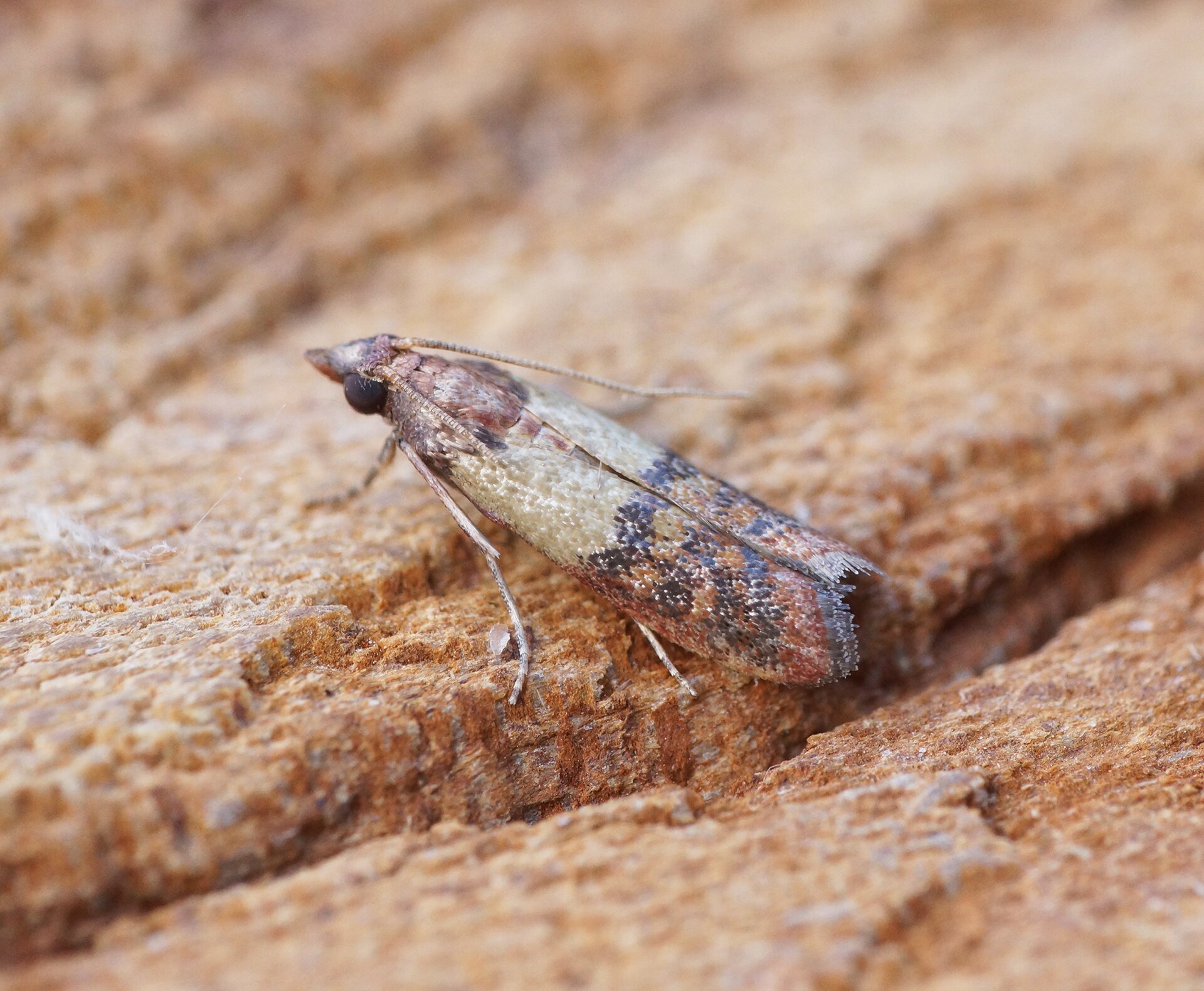
A PRACTICAL HOME GUIDE
First identify whether the activity comes from stored food, animal-based fabrics or a moth that simply flew in. The source determines the next step; the adults you see are only part of the story.
Look at where moths appear. Photograph an adult and check nearby food or textiles for larvae and webbing.
Discard infested dry foods. Isolate affected garments and have them cleaned according to their care labels.
Vacuum shelves, cracks, closet edges and storage spaces; empty the vacuum promptly.
Use tight containers for dry goods and clean, sealed storage for vulnerable natural-fiber items.
FIND THE SOURCE
Small moths indoors can have very different origins. The location of the first sightings is a useful clue, but inspection of food or fabric confirms the source.
Indianmeal moths can arrive with infested dry goods such as cereal, flour, nuts, bird seed or pet food. Look for larvae and silk webbing in packages and shelf corners.
Clothes moth larvae feed on wool, fur, feathers and similar animal-based materials, especially items kept undisturbed. Look for irregular damage, larvae or cases in hidden folds and edges.
FOUR MOTHS TO KNOW
These four moths affect different materials. The photographs show real specimens for orientation; the larvae and the material they occupy are often more useful for confirming the problem.
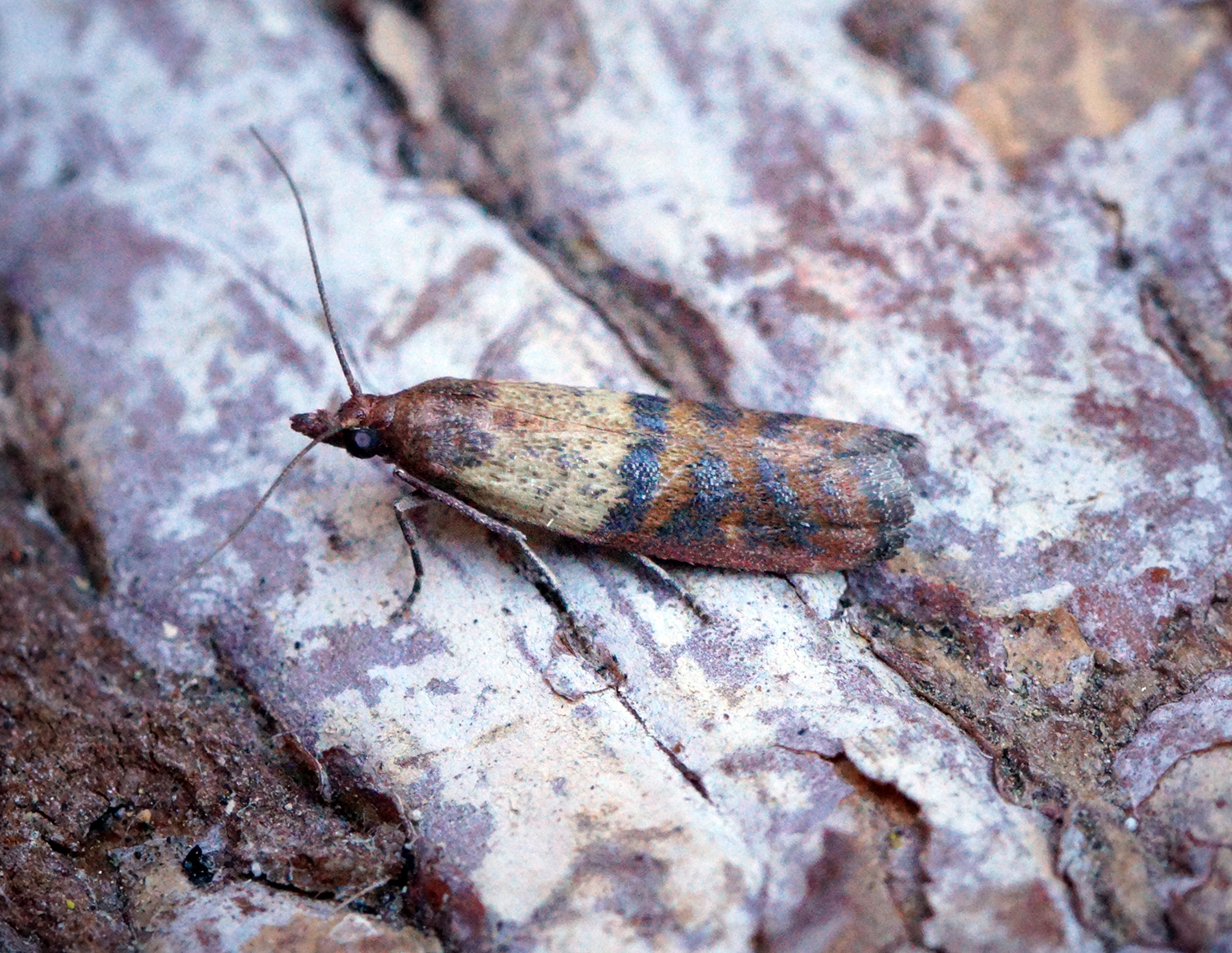
Its forewings are pale near the body and coppery brown toward the tips. Larvae feed in many dry foods and leave silk webbing.
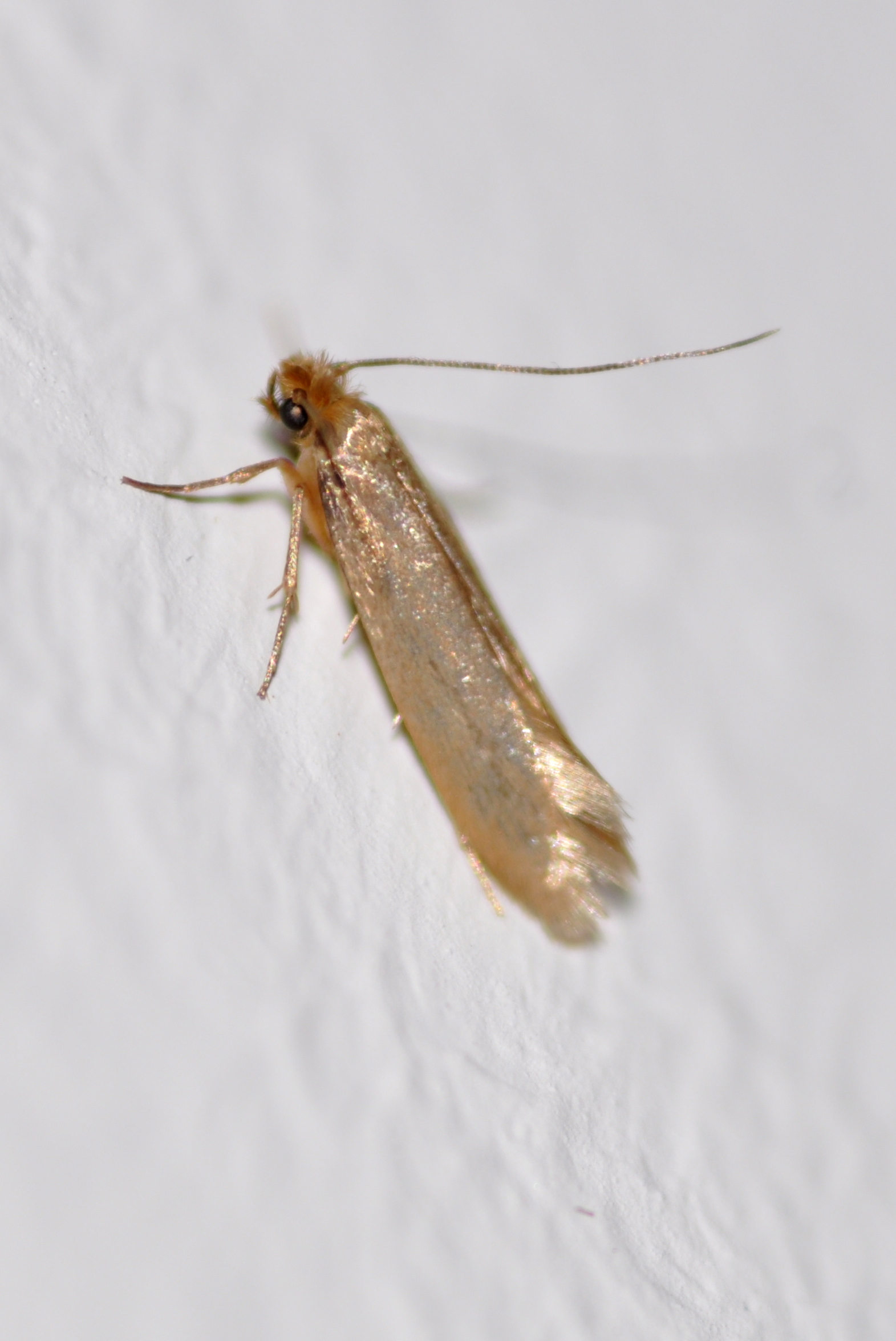
Adults have mostly plain golden wings. Larvae spin silk as they feed on wool, feathers, fur and other animal-based fibers.
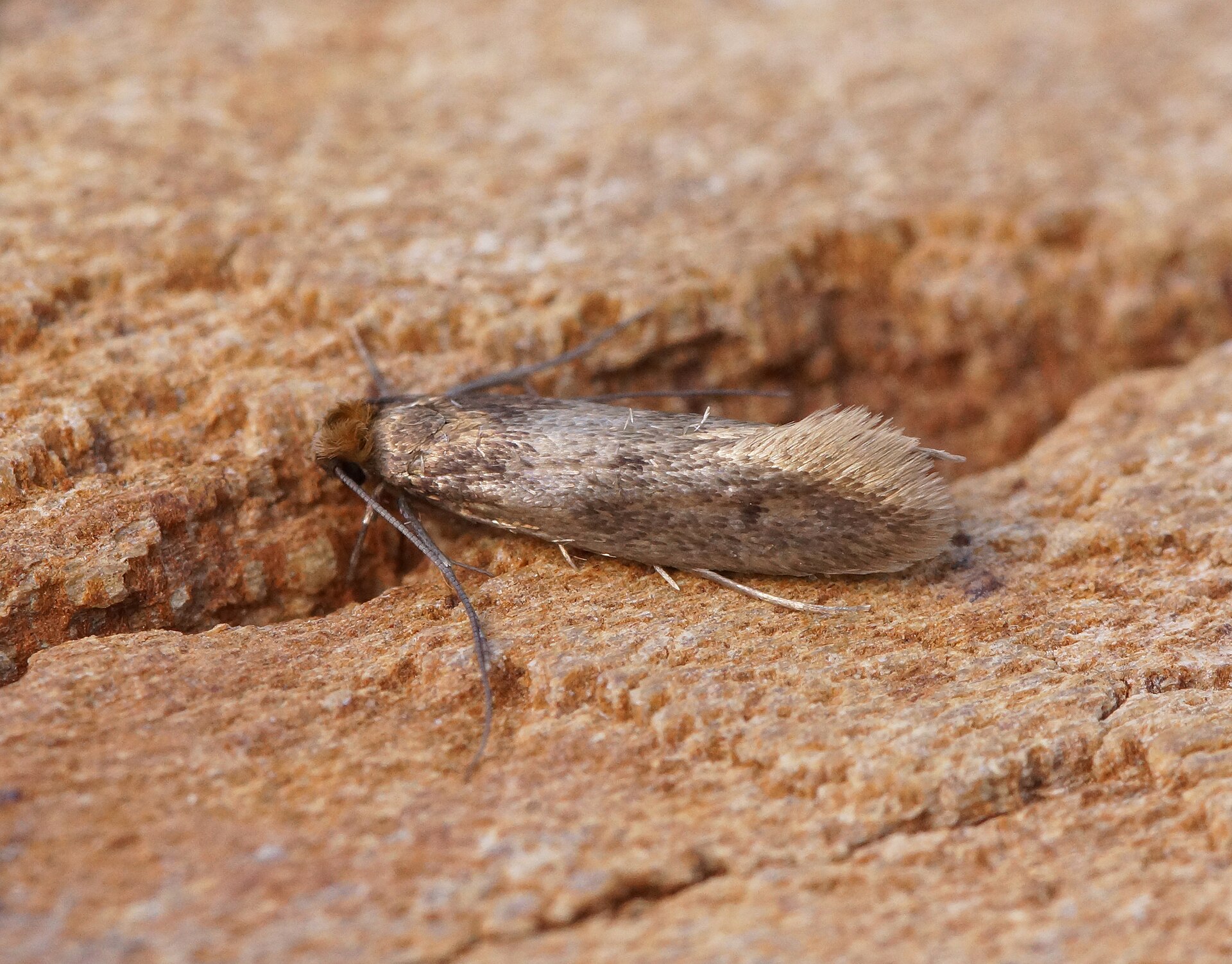
Its larvae carry a small silk case made with fibers from their food. They can damage susceptible stored textiles.
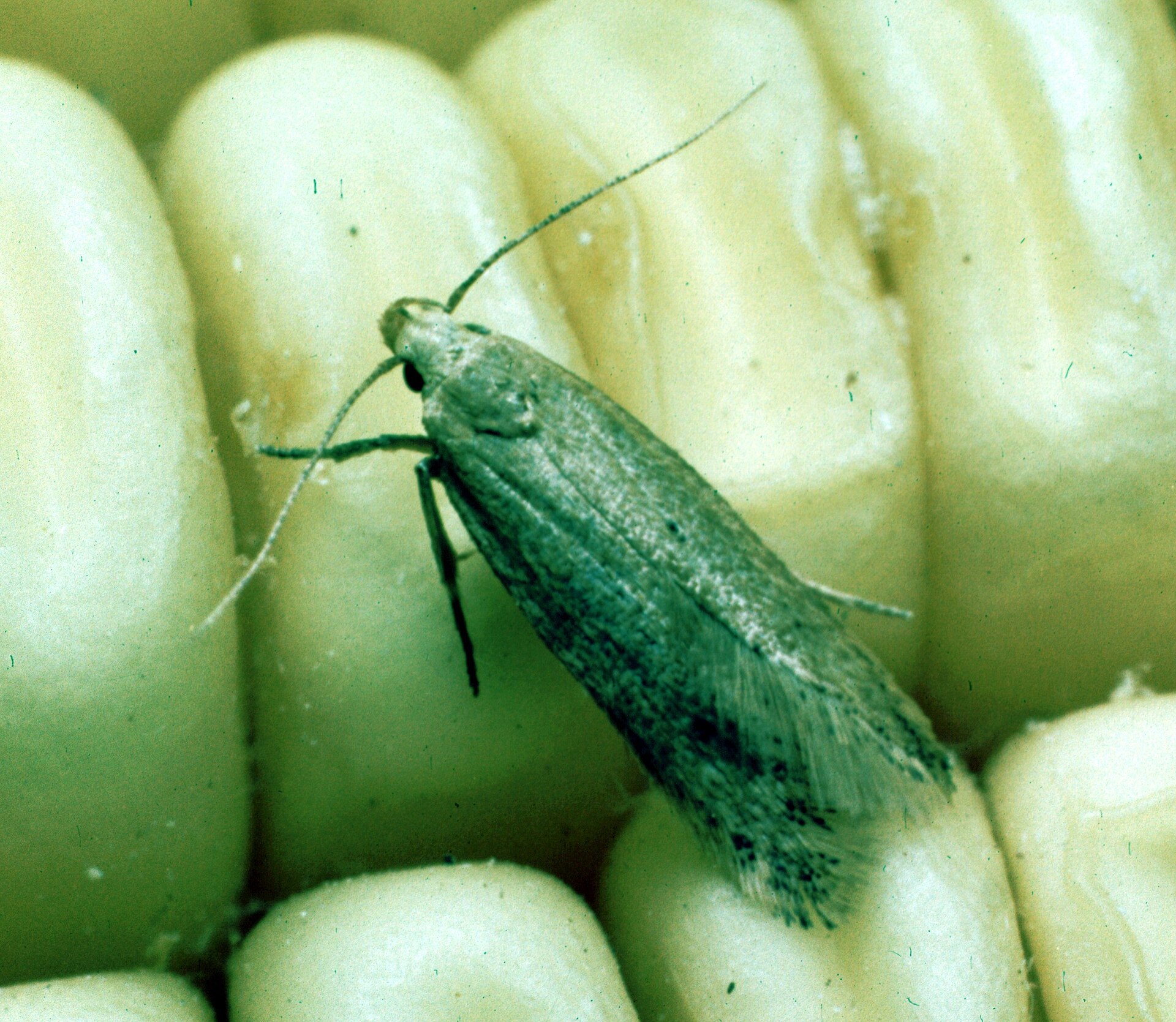
A stored-grain moth whose larvae develop inside intact kernels. It is more closely tied to grain storage than to clothing.
QUESTIONS FROM HOMEOWNERS
The useful question is often where the larvae are developing. Here are direct answers to searches people make after seeing small moths indoors.
Clothes moth larvae, not the adults, feed on susceptible animal-based fibers such as wool, fur and feathers. Cotton and synthetics alone are generally not their preferred food.
They may be pantry moths emerging from an infested dry food. Inspect cereals, grains, nuts, bird seed and pet food for larvae or webbing.
Pheromone traps can help detect and monitor a matching moth species. They do not remove larvae in food or fabric, so finding and addressing the source remains essential.
THE VORIAN APPROACH
A source-led plan protects stored food and valuable textiles with practical, property-specific recommendations.
We identify the moth, inspect the likely source and explain the cleaning or storage changes that matter. When a treatment is appropriate, it is selected for the site and applied according to its label. Food and clothing are never treated directly with pesticides.
REQUEST SERVICEDetermine whether the activity involves pantry, clothes or an outdoor moth.
Check susceptible packages, closets and stored textiles.
Recommend removal, cleaning and secure storage where needed.
Use monitoring and focused treatment only where they add value.
Research: University of Minnesota Extension, Pantry Pests; Penn State Extension, Clothes Moth; Penn State Extension, Common Urban Pests. Photography: Ben Sale, hero (CC BY 2.0); Ben Sale, Indianmeal moth (CC BY 2.0); Aiwok, webbing clothes moth (CC BY-SA 3.0); Ben Sale, casemaking clothes moth (CC BY 4.0); Clemson University / Bugwood, Angoumois grain moth (CC BY 3.0 US). Images cropped for layout; specimens are not shown at natural size.