Confirm the insect
Collect or photograph a specimen. Springtails, bed bug nymphs and other small insects need different responses.
VORIAN / BOOKLICE CONTROL
Booklice often point to excess moisture. We identify the insect, find the conditions behind it and plan a measured response for New Jersey homes and businesses.
REQUEST SERVICE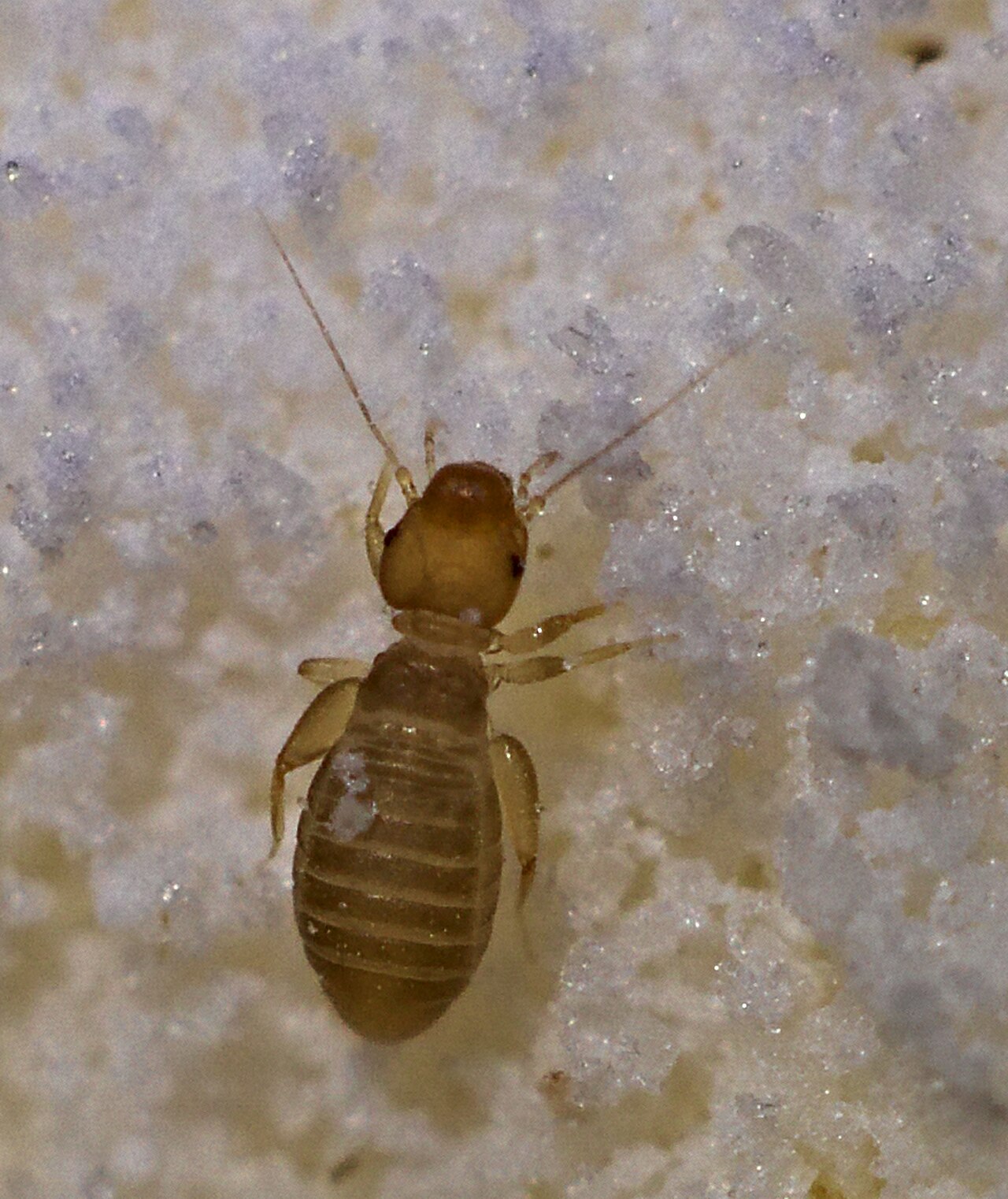
A PRACTICAL HOME GUIDE
Start with a reliable identification, then dry the area where they appear. Booklice thrive around moisture and microscopic fungal growth; repeated spraying without correcting dampness is unlikely to address the source.
Keeping indoor relative humidity below 50% helps prevent the mold growth and booklouse development associated with damp rooms. Use a hygrometer to check the problem area.
Collect or photograph a specimen. Springtails, bed bug nymphs and other small insects need different responses.
Improve airflow, run a dehumidifier where needed and repair plumbing or roof leaks.
Vacuum visible insects and clean accessible mold according to the surface and moisture source.
Keep books and boxes off damp floors. Discard infested food and store clean dry goods in sealed containers.
IDENTIFICATION GUIDE
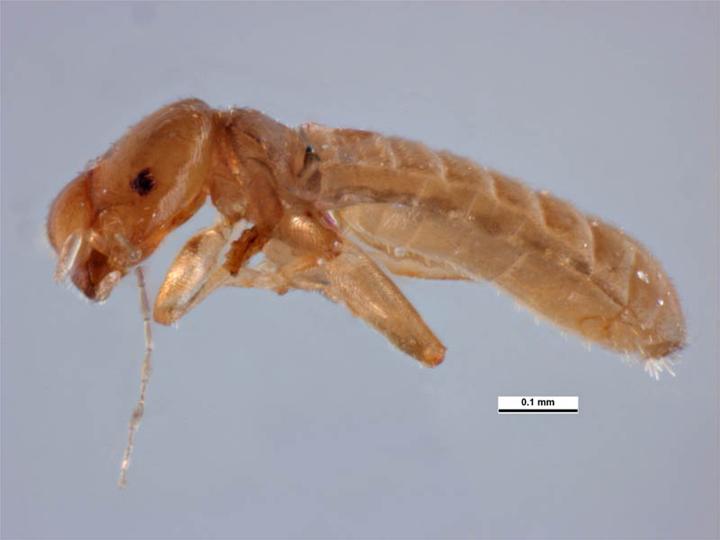
Indoor booklice are often tiny, wingless psocids about 1–2 mm long. Their soft bodies may look nearly clear, tan or gray; a relatively large head and long antennae help distinguish them.
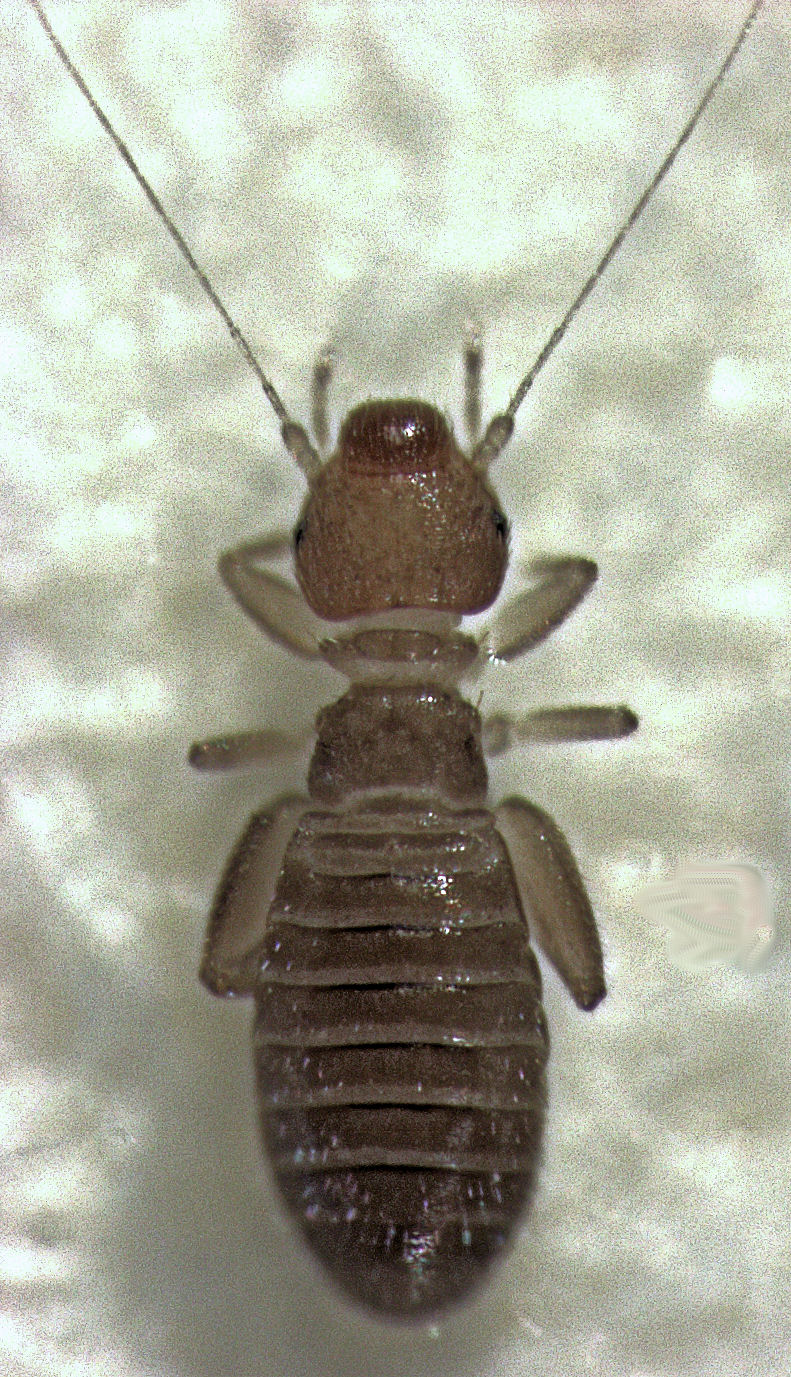
Common indoor booklice are usually around 1–2 mm long. A close photo or hand lens helps with identification.
They have a soft body, conspicuous head and slender antennae. Many indoor species are wingless.
Color varies with the species and life stage, so color alone is not enough to identify one.
Look around humid paper, boxes, cabinets or stored food rather than on people or pets.
FOLLOW THE MOISTURE
Their presence often indicates a damp microclimate where fungi or mold can grow. The location is a clue to the source: check for condensation, leaks or items stored while wet.
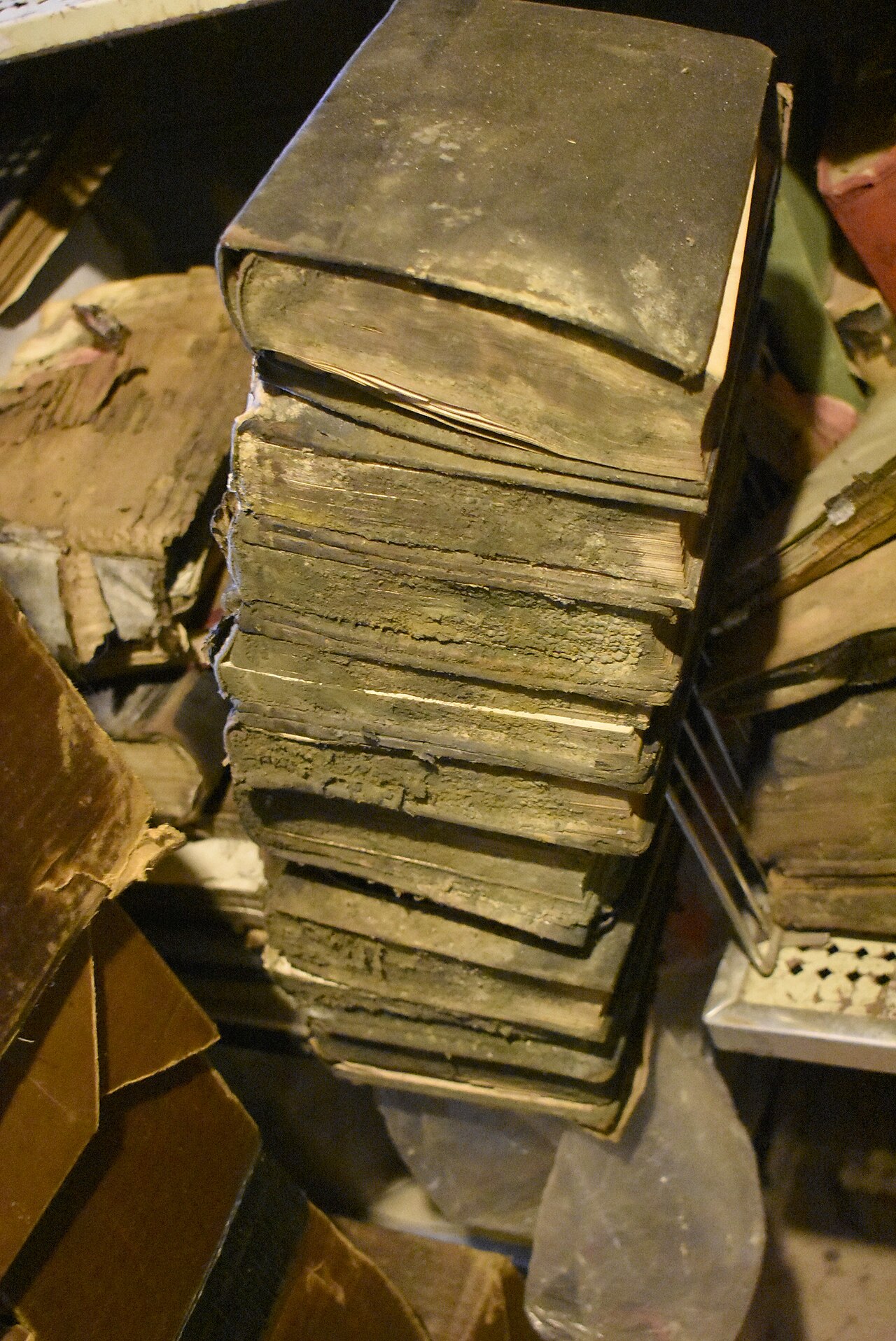
Bathrooms, basements and poorly ventilated storage areas can remain moist enough to support booklice.
A dripping pipe, roof leak or persistently wet window area can keep nearby surfaces damp.
Books and boxes absorb moisture. Booklice may feed on microscopic growth or starchy material around them.
They can occur in damp grain or flour. Infested products should be discarded, and remaining dry goods kept sealed.
QUESTIONS FROM HOMEOWNERS
Short answers to the concerns that arise when tiny insects appear around books, bathrooms or pantries.
No. Booklice are not parasitic lice, do not live on people or pets and do not bite.
They can signal excess moisture and may be feeding on microscopic fungal growth. Their presence alone does not confirm a mold problem; inspect the area.
They usually cause little direct damage. They may feed on mold and starchy materials around damp books or bindings; the moisture itself often causes more damage.
Yes, some are found in stored grains or flour, especially when those products become damp. Discard contaminated food and check nearby packages.
THE VORIAN APPROACH
The right response begins with knowing what the insect is and why that spot stays damp.
We inspect the activity, trace moisture and give clear, property-specific recommendations. If treatment is appropriate, it supports the plan; drying the source remains central.
REQUEST SERVICEConfirm booklice and distinguish them from other tiny indoor pests.
Evaluate humidity, leaks, ventilation and affected materials around the activity.
Prioritize drying, cleaning and storage changes with targeted service only where useful.
Share practical steps to keep the area dry and monitor whether activity declines.
Research: University of Minnesota Extension; Penn State Extension; University of Maryland Extension; Cornell Cooperative Extension. Photography: Andreas Eichler, hero (CC BY-SA 4.0); S.E. Thorpe (public domain); K. Walker (CC BY 3.0 AU); Heritage Preservation Department – MNHS (CC BY-SA 2.0). Photographs are magnified for display and are not shown at natural size.