Inspect dry goods
Check opened and unopened packages, including pet food and birdseed, for insects, larvae or webbing.

VORIAN / STORED-PRODUCT PESTS
A refined, source-led approach to insects in dry foods and stored materials. Identification and control for homes and businesses across Middlesex, Union and Essex counties, New Jersey.
REQUEST SERVICE
A PRACTICAL HOME GUIDE
Find the infested product first. Stored-product pests can live in flour, cereal, rice, pasta, nuts, dried fruit, spices, birdseed and dry pet food. Cleaning works best after the source is found and removed.
Check opened and unopened packages, including pet food and birdseed, for insects, larvae or webbing.
Seal infested food in a bag and discard it. Inspect nearby packages for additional activity.
Clean shelf corners, cracks and spills; empty the vacuum after use.
Store unaffected dry goods in tightly closed glass, metal or heavy plastic containers.
FOLLOW THE SOURCE
An infestation can begin before a package reaches your kitchen, or after purchase. Finding pantry pests is not a reflection of housekeeping. Stored insects can also spread from one package to foods nearby.
Eggs or larvae may be present in dry foods during processing, shipping, store storage or home storage. Packaging can look normal from the outside.
Some insects can enter thin packaging or exploit folds and seams. Check overlooked supplies such as birdseed, pet food, dried flowers and decorative grains.
AN IDENTIFICATION GUIDE
These six examples show why identification matters. The source may be grain, processed food, spices or another dry plant product; a clear specimen photo can help narrow the search.
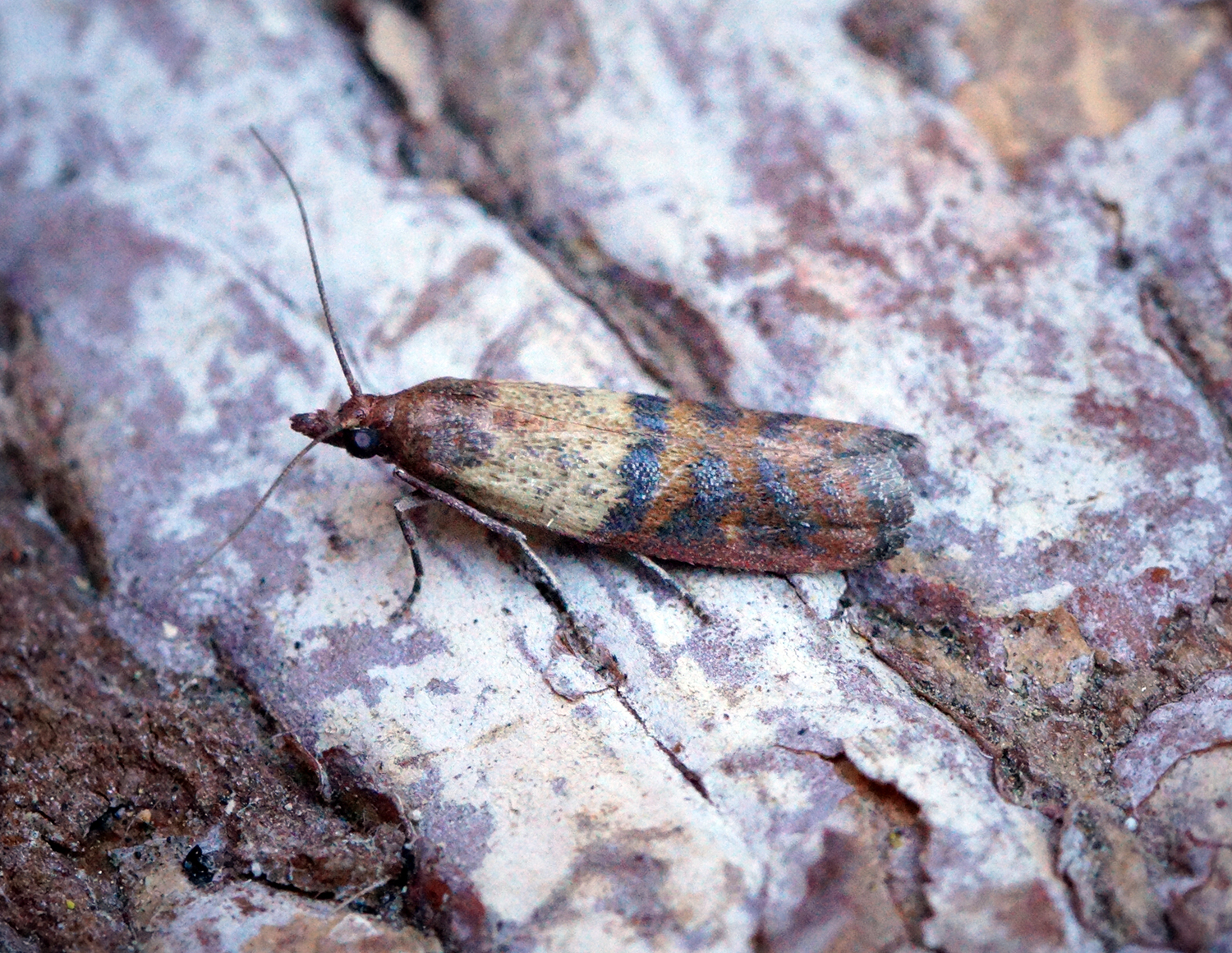
Its larvae feed in many dry foods and leave silk webbing. Mature caterpillars may crawl onto walls or ceilings to pupate.
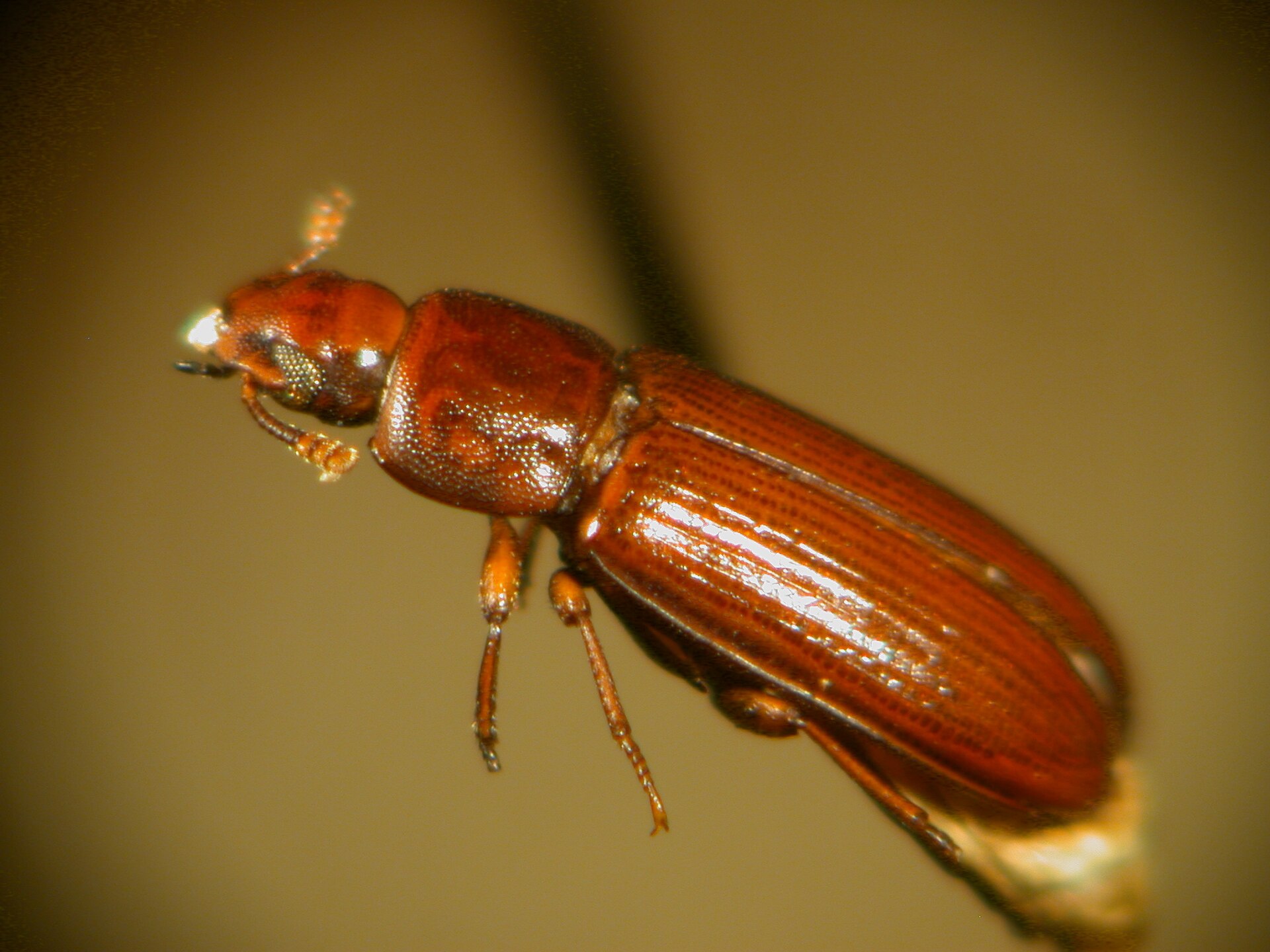
Red flour beetles occur in homes; confused flour beetles are more often associated with mills. Both can develop in flour and other processed foods.
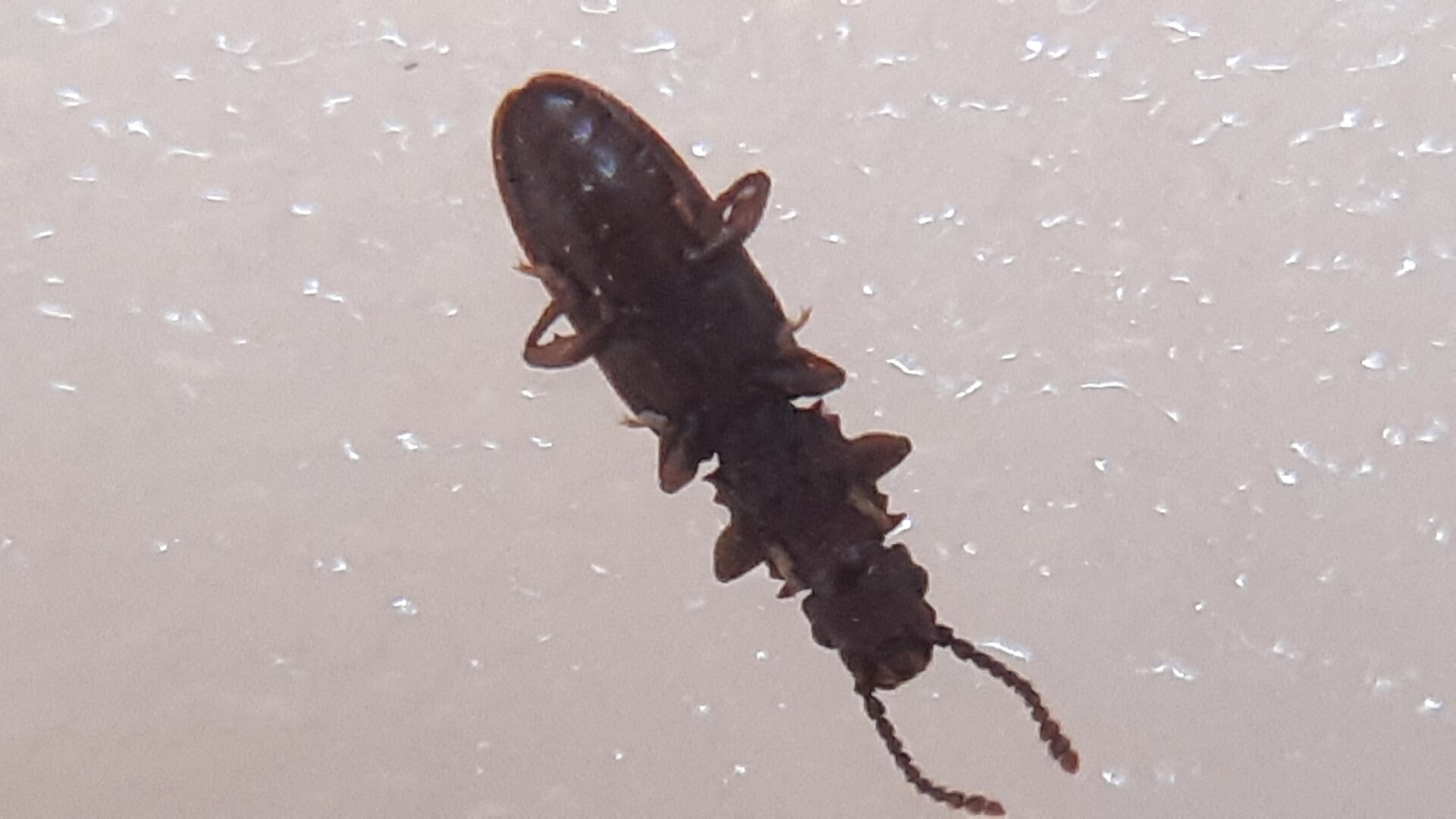
A narrow, flattened beetle with small tooth-like projections behind the head. It occurs in cereals, pasta, nuts, seeds and dried fruit.
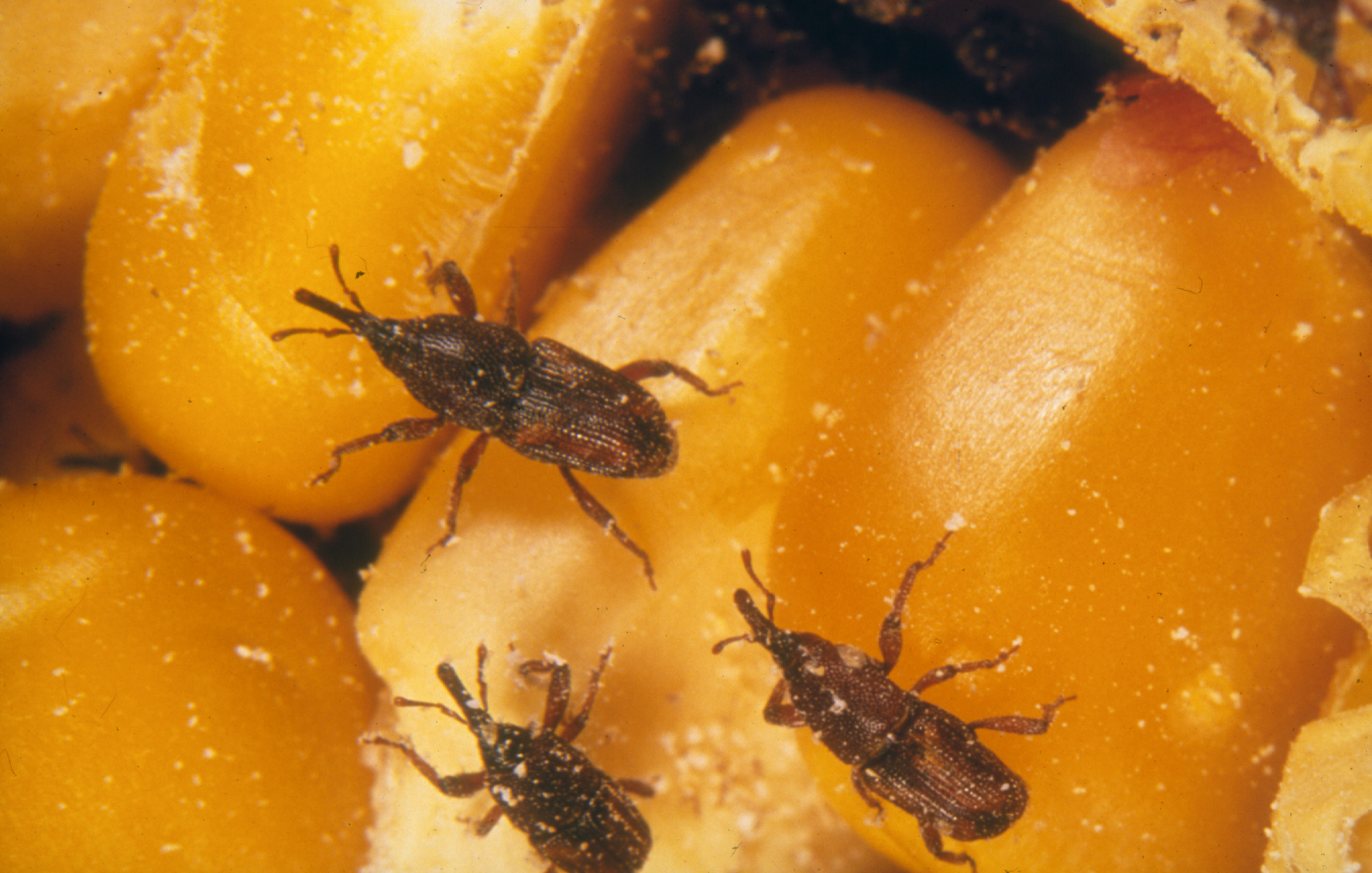
Rice, granary and maize weevils have a noticeable snout. Their larvae develop within whole kernels or seeds, which may show round exit holes.
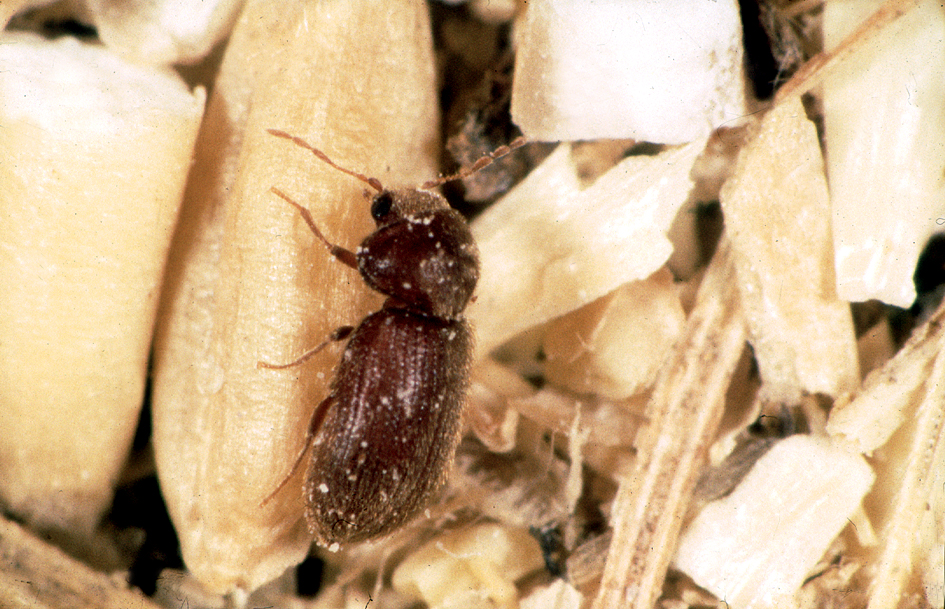
A small, oval brown beetle associated with many dry plant products, including spices and grain foods. Adults may fly toward windows.
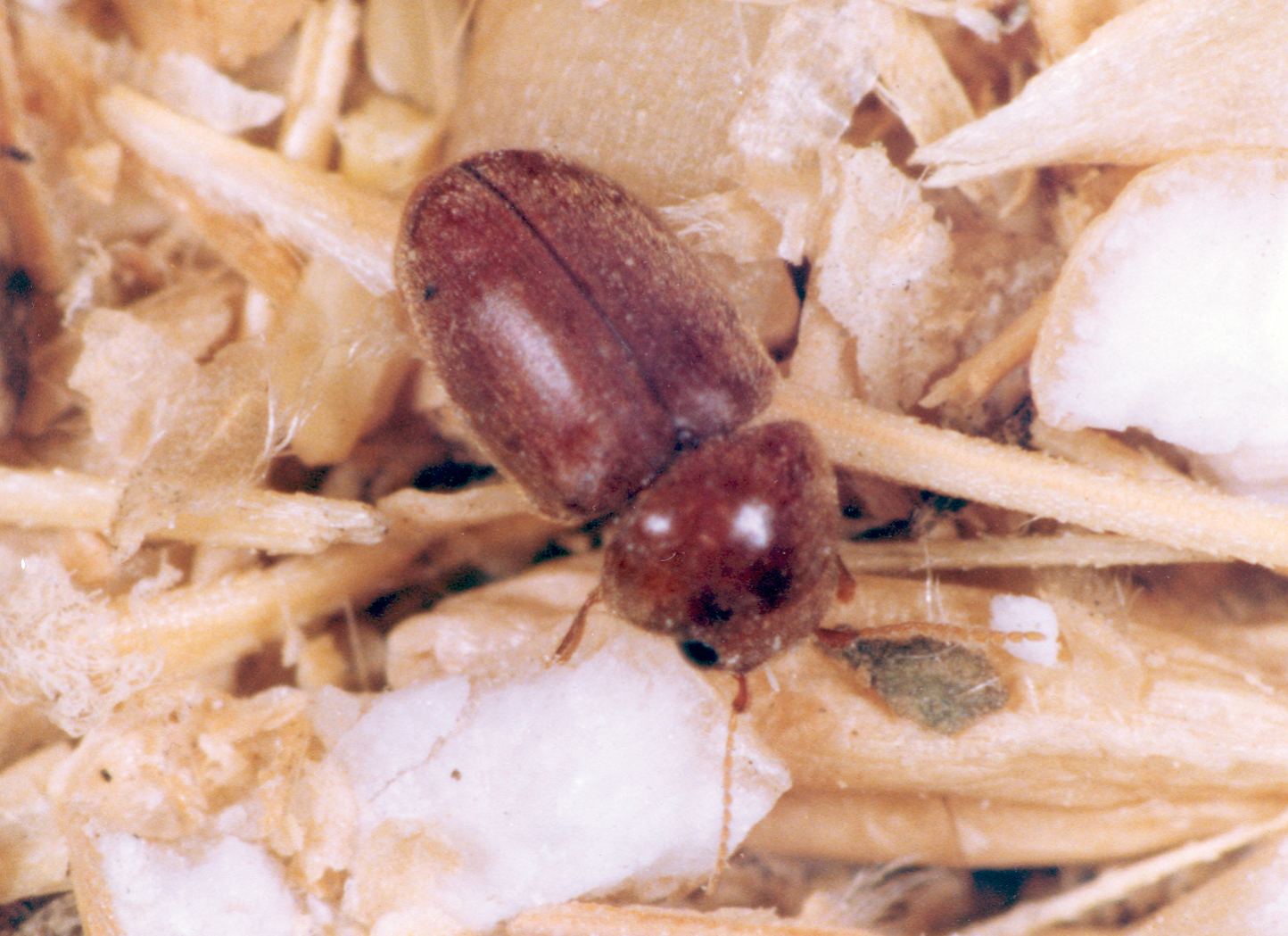
Similar in size and shape to the drugstore beetle, but a distinct species. It can infest spices, dried herbs and other stored plant products.
SIGNS & PREVENTION
A sighting near food is a cue to inspect, not proof that every package is infested. Look for activity in susceptible products and nearby storage spaces.
QUESTIONS FROM HOMEOWNERS
Direct answers to common searches, grounded in the difference between the insect you see and the product where it developed.
Stored foods can become infested during production, shipping, store storage or after purchase. Insects may also move from one infested package to foods nearby.
No. They can arrive inside a purchased package. Clean shelves and sealed storage help limit spread, but a sighting is not a judgment on housekeeping.
Indianmeal moth larvae can leave food and pupate elsewhere. Adults may appear for several weeks after the source is removed. Continued activity calls for a search of nearby and overlooked products.
Start with source removal and vacuuming. Household sprays do not reach insects inside packages, and insecticides are not recommended for routine use in food cupboards. Any professional application must follow its label and keep food protected.
Request an inspection if activity keeps returning, the source is hard to locate or insects are appearing across multiple storage areas. Identification guides the next steps.
THE VORIAN APPROACH
A careful inspection connects the insect to its source and leaves you with a clear plan for the space.
Vorian can identify the pest, inspect the affected storage area and recommend removal, cleaning and prevention measures. When treatment is warranted, it is targeted and applied according to the product label, away from food and food-contact surfaces.
REQUEST SERVICEConfirm the insect and map where it appears.
Check foods, pet supplies and other dry materials.
Prioritize removal, vacuuming and secure storage.
Assess activity after the source is addressed and adapt the plan if needed.
Research: University of Minnesota Extension, Pantry Pests; Rutgers NJAES, Bugs in My Cereal; Rutgers NJAES, Pantry Pests; Penn State Extension, Drugstore Beetle. Photography: Shixart1985, pantry (CC BY 2.0); Ben Sale, moth (CC BY 2.0); Eric Day, flour beetle (public domain); Mehmet Akif Suna, sawtoothed grain beetle (CC BY 4.0); CSIRO, rice weevil, drugstore beetle and cigarette beetle (CC BY 3.0). Photographs cropped for layout; specimens are not shown at natural size.