Identify what you found
Save a specimen or clear photo. The species helps determine where to inspect.
VORIAN / BEETLE CONTROL
Considered beetle identification and focused control for homes and businesses across Middlesex, Union and Essex counties.
REQUEST SERVICE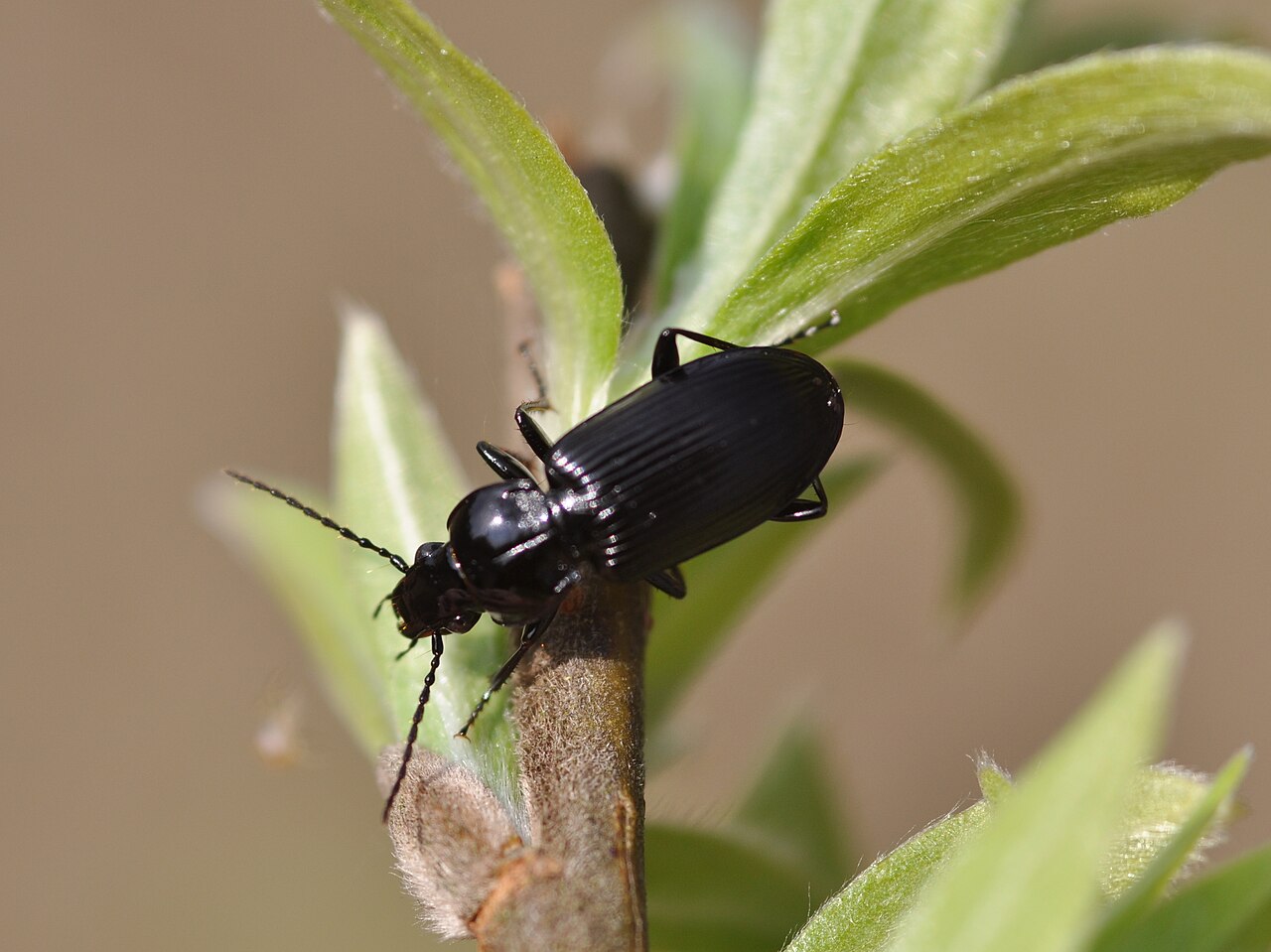
A PRACTICAL HOME GUIDE
The right next step depends on the beetle. Some enter from outdoors; others develop where natural fibers, damp organic material or wood is available. Find the source before choosing a response.
Save a specimen or clear photo. The species helps determine where to inspect.
Check affected fabrics, stored foods, lint, damp spaces, wood or exterior openings as appropriate.
Vacuum affected edges and crevices; discard infested material when needed.
Store susceptible items securely, reduce moisture or seal entry gaps based on the species.
IDENTIFICATION NOTES
These beetles can be encountered in or around homes. Their habits differ, so a photo alone cannot confirm where an infestation is developing.
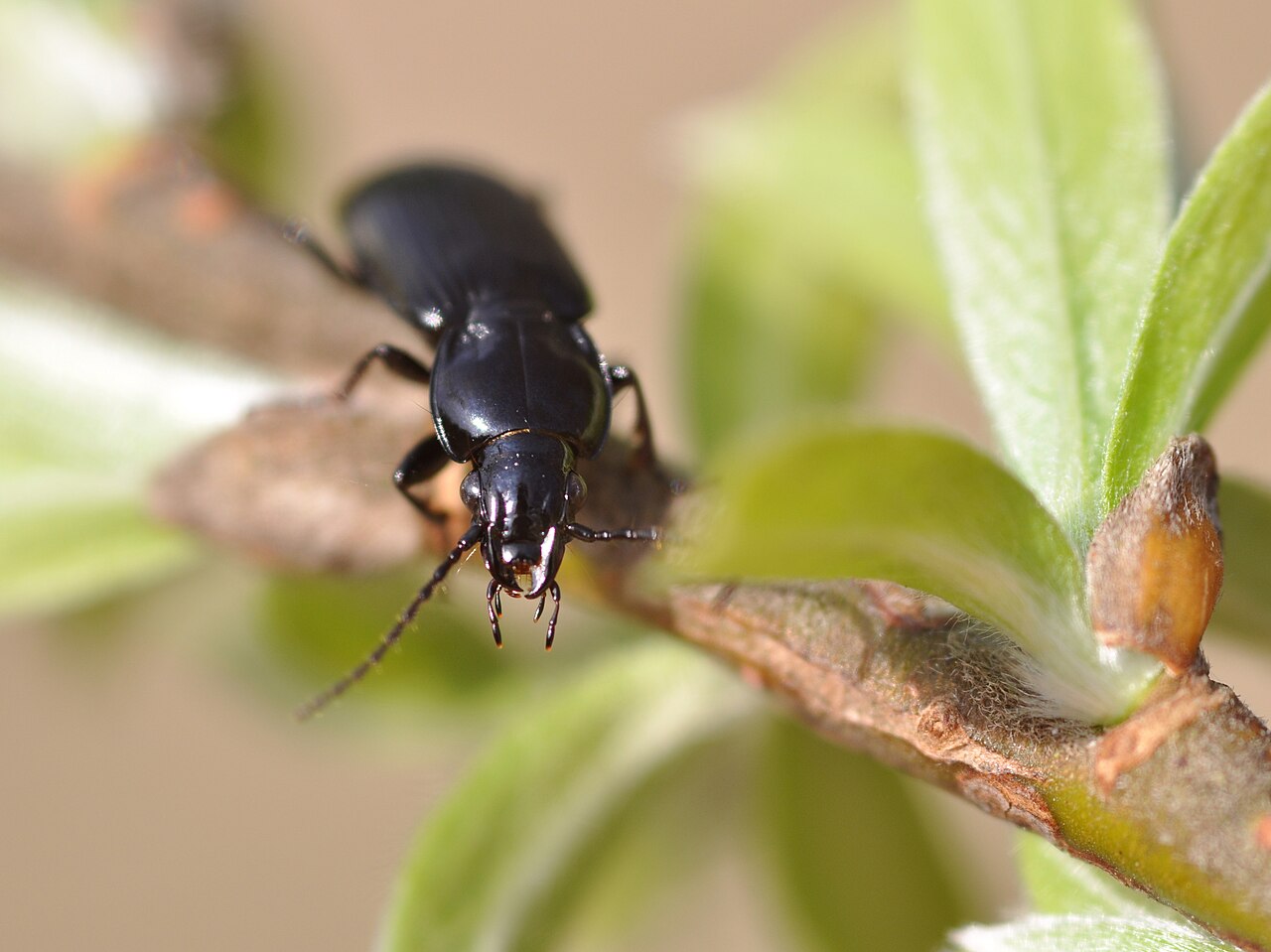
Usually an outdoor predator. Ground beetles may enter through gaps, but they do not damage food, fabric or the structure.
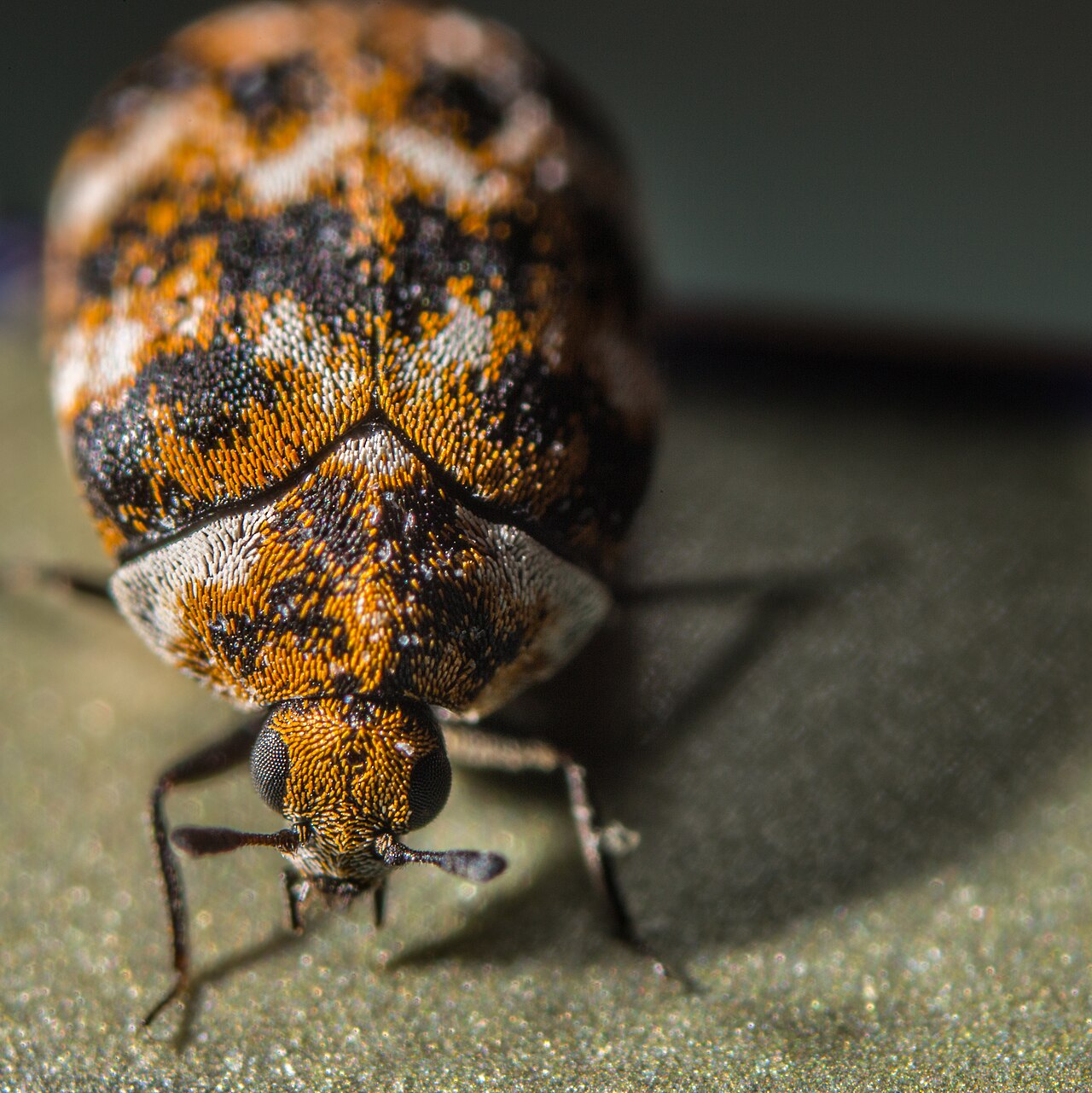
Small patterned adults are often seen near windows. Their larvae can feed on wool, feathers and other animal-based materials.
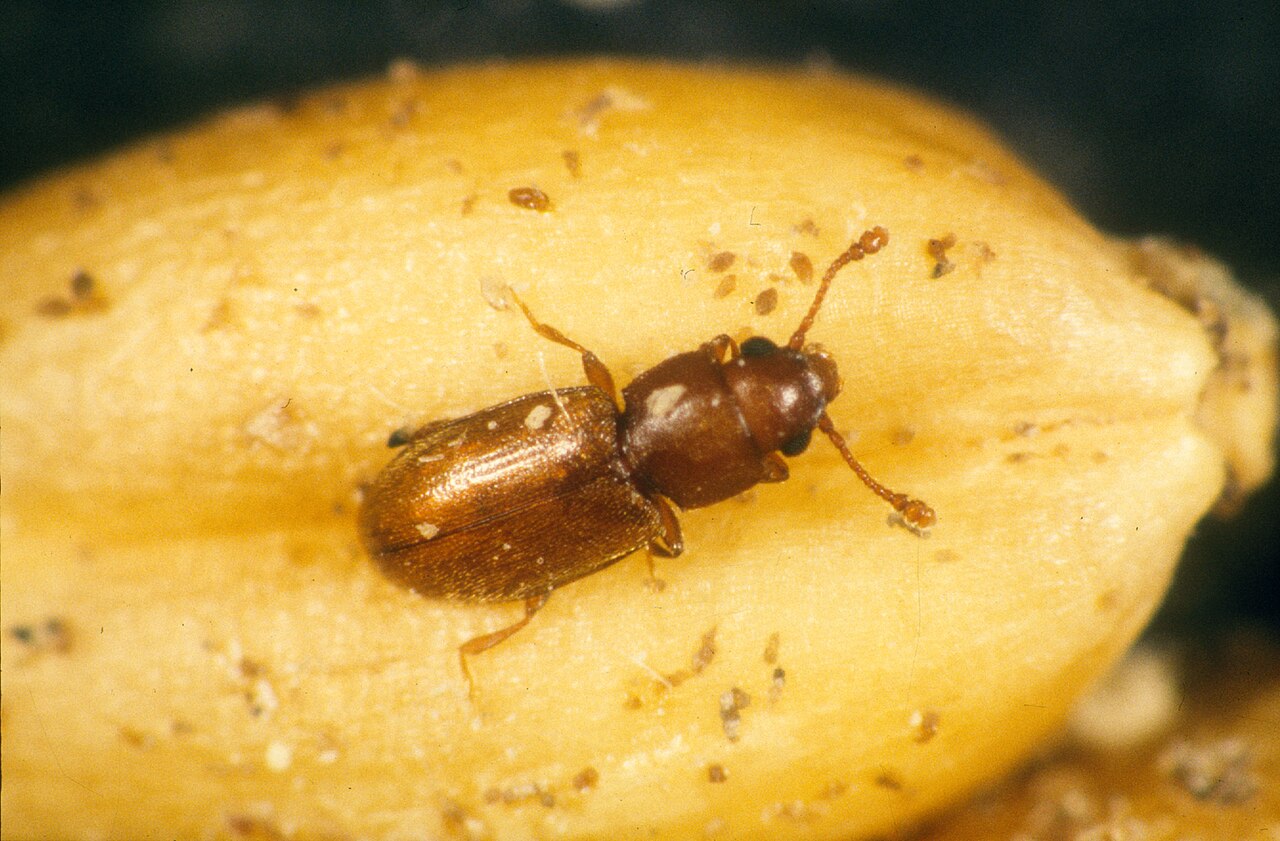
A tiny reddish-brown beetle associated with damp areas where fungus grows. It is often a temporary nuisance in newer buildings.
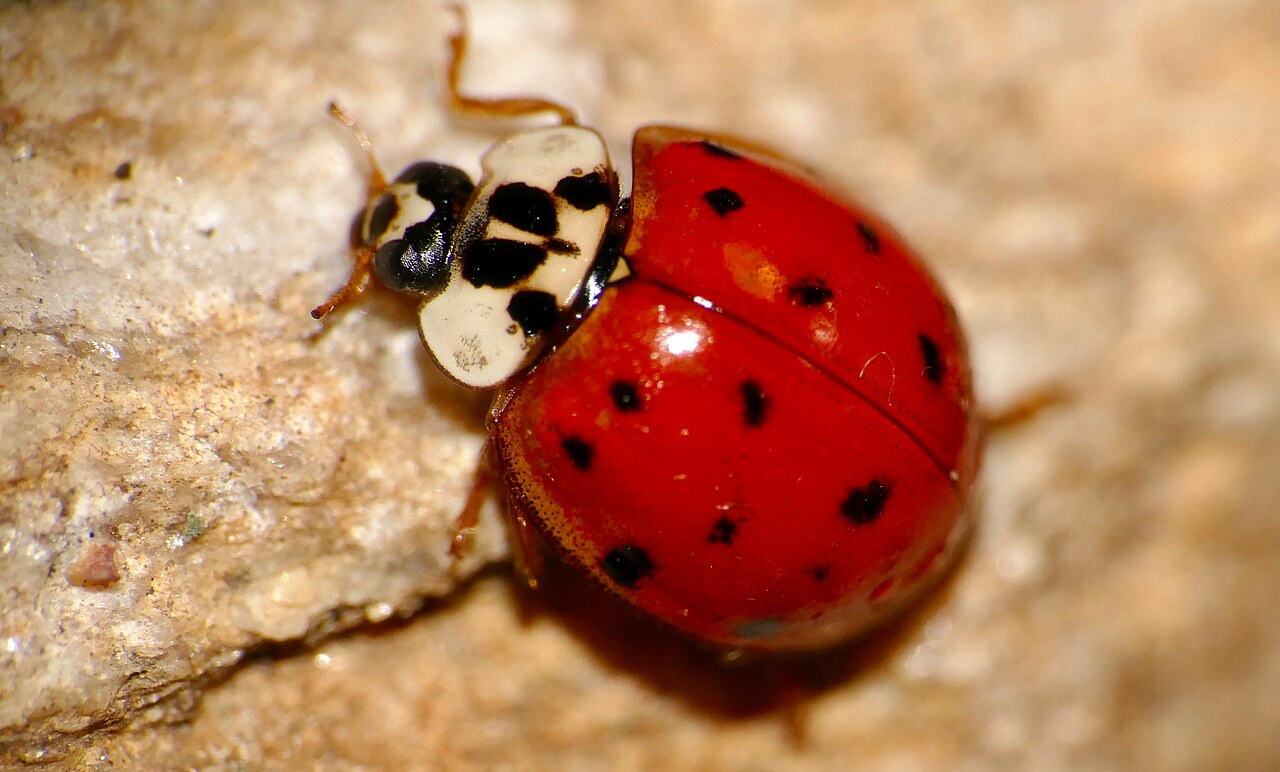
Adults may gather on buildings in fall and enter through gaps to overwinter. They do not reproduce indoors.
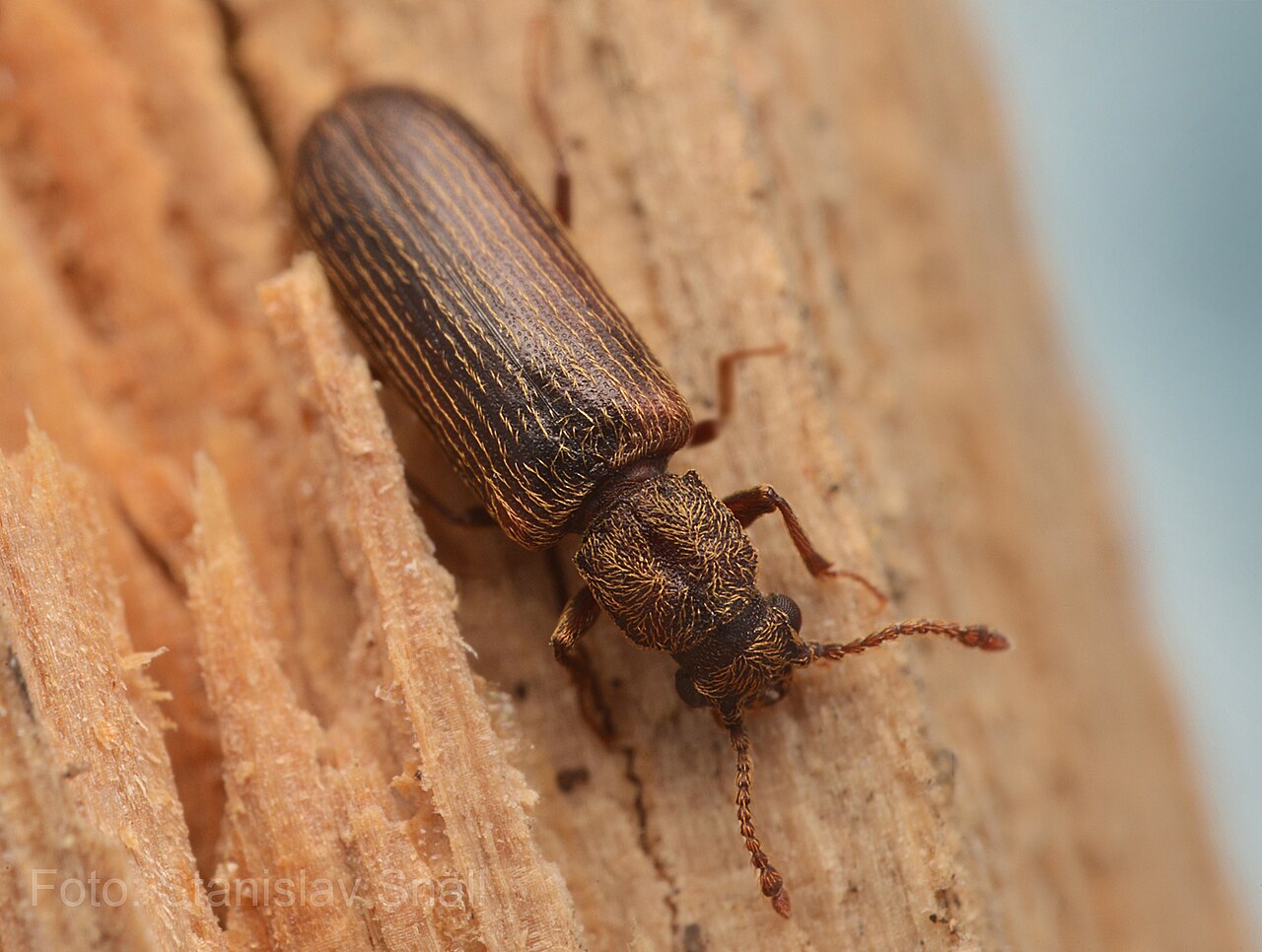
Lyctine larvae develop in seasoned hardwood. Small round exit holes and fine, powdery material can be clues that warrant identification.
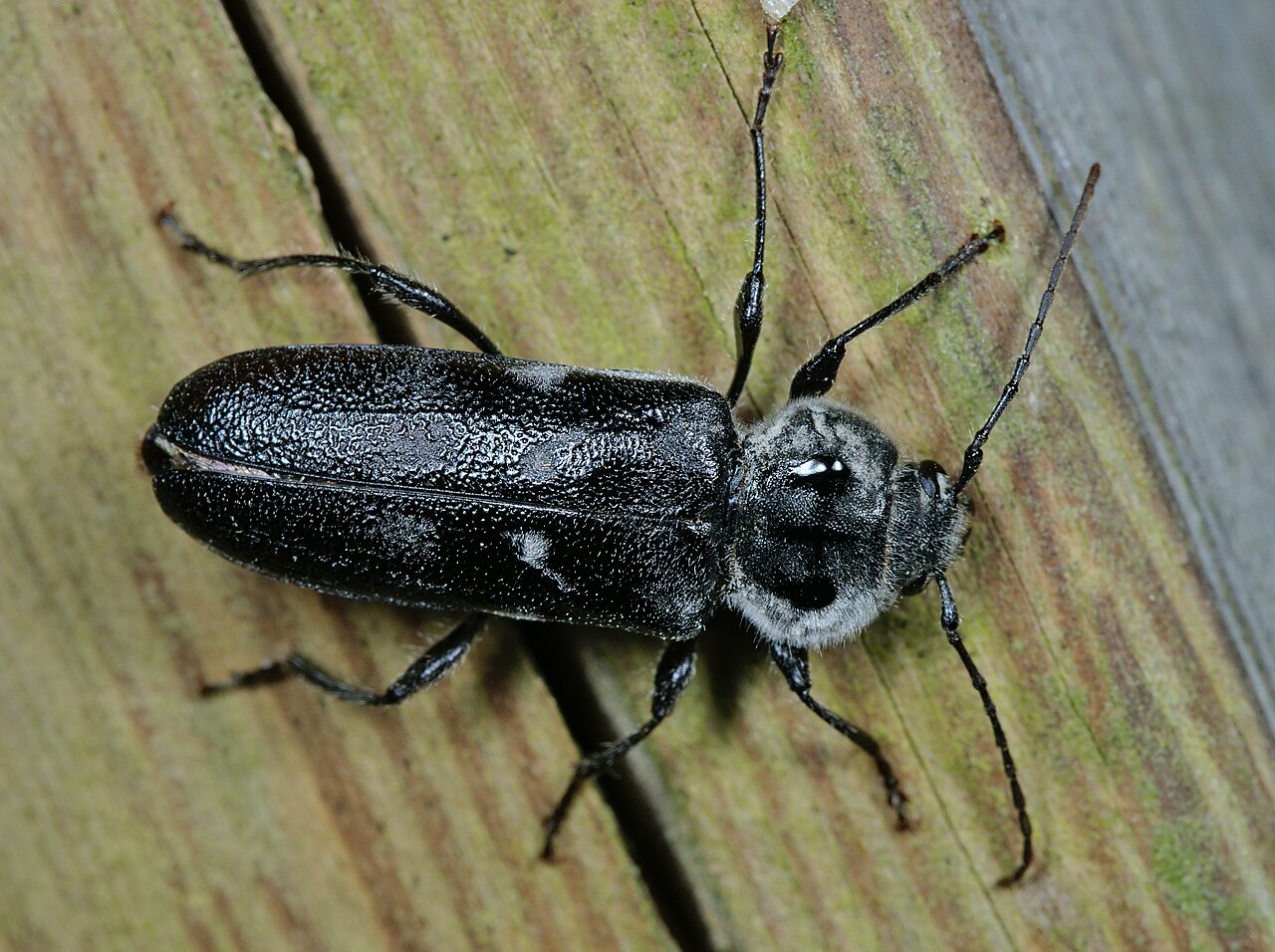
Larvae can develop in seasoned softwood. Adults have long antennae and may leave oval emergence holes; a hole alone does not establish current activity.
QUESTIONS FROM HOMEOWNERS
A sighting has different meanings depending on the beetle and where it was found. These answers help guide the first inspection.
Some fly or crawl in through openings. Others may emerge from a source indoors, such as natural-fiber items, stored materials or damp spaces. Repeated sightings call for species identification and a focused search.
Carpet beetles do not bite. Contact with hairs from their larvae can irritate the skin of some people. If symptoms persist or are concerning, seek medical advice.
No. Ground beetles are usually accidental visitors and do not damage household materials. Carpet beetle larvae and some other species can affect susceptible items, so identification matters.
THE VORIAN APPROACH
We inspect the activity and the likely source, then recommend practical measures suited to the beetle and the property.
From a beetle entering at a doorway to larvae developing in stored materials, the plan starts with the cause of the activity.
REQUEST SERVICEDetermine the beetle and assess where activity is occurring.
Check the materials or conditions that may support the species.
Recommend measures appropriate to the identified beetle and site.
Discuss storage, sanitation, moisture and entry-point improvements where relevant.
Research: Penn State Extension: Powderpost Beetles; Penn State Extension: Old House Borer; University of Minnesota Extension: Asian Lady Beetles; Rutgers Cooperative Extension: Carpet Beetles; University of Minnesota Extension: Ground Beetles; University of Minnesota Extension: Foreign Grain Beetles; Penn State Extension: Carpet Beetles. Photographs: Aiwok, hero and Aiwok, ground beetle, CC BY-SA 3.0; Brian Tomlinson, CC BY 2.0; CSIRO, CC BY 3.0; Bernard Dupont, CC BY-SA 2.0; Stanislav Snäll, CC BY 3.0; Gilles San Martin, CC BY-SA 2.0. Images resized and framed for display.