CONFIRM THE ACTIVITY
Look for bees visiting round holes, fresh wood shavings below them or repeated activity around exposed wood.

VORIAN / CARPENTER BEE CONTROL
Carpenter bee identification and thoughtful control for homes across Middlesex, Union and Essex counties.
REQUEST SERVICE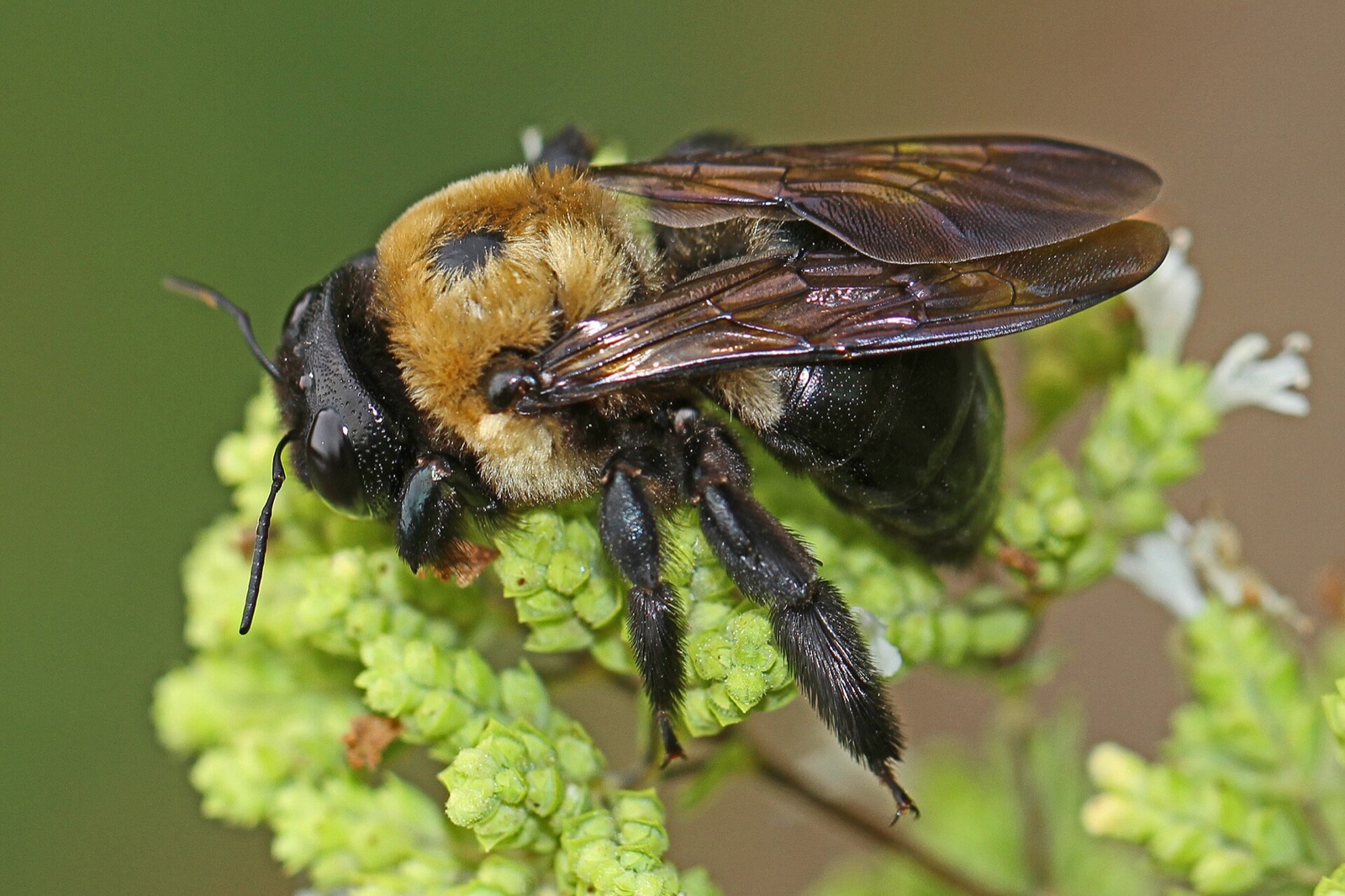
HOMEOWNER'S GUIDE
Female carpenter bees excavate nesting galleries in wood. The best response starts with confirming activity and choosing a treatment and repair plan suited to the location.
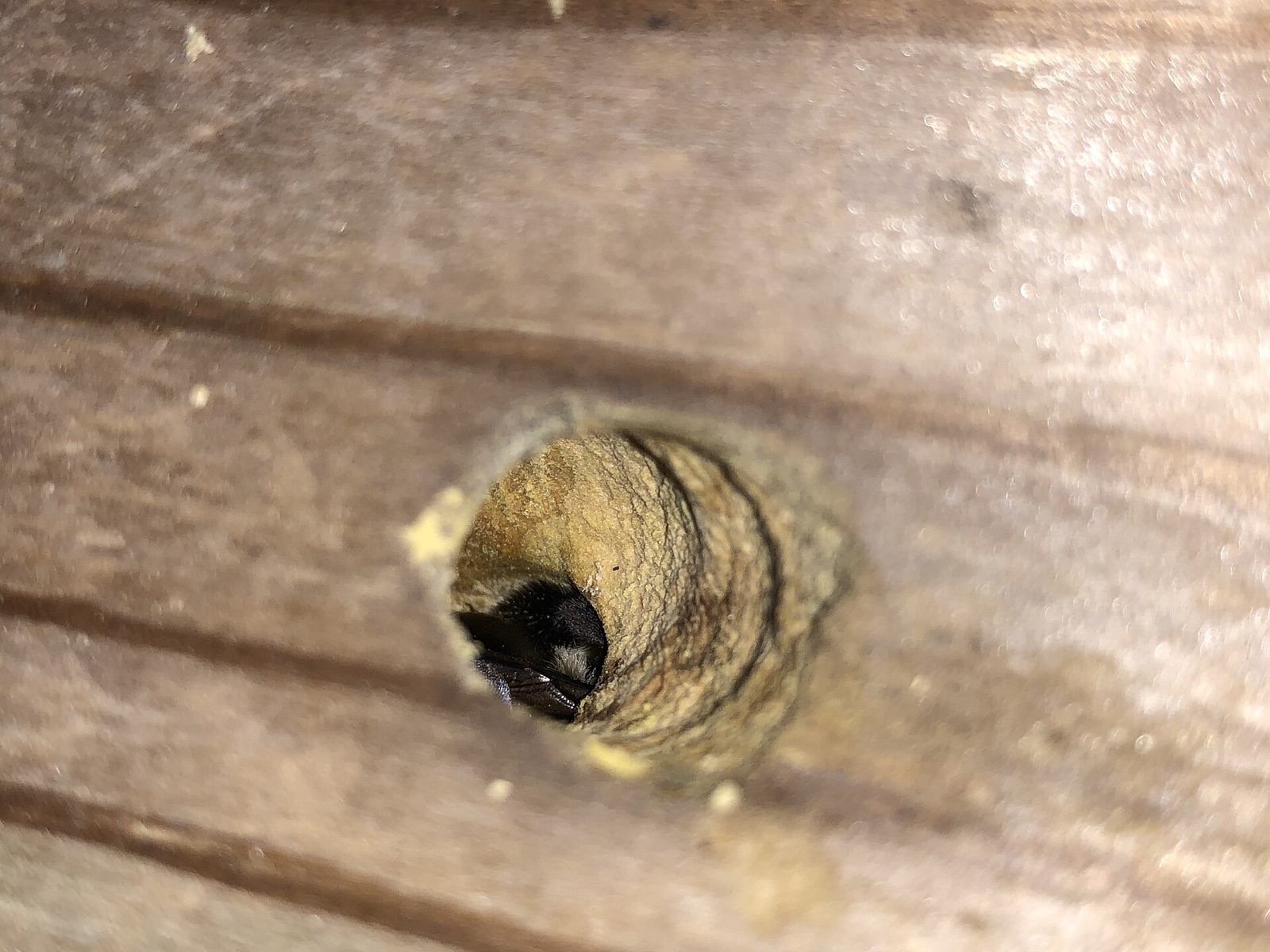
Look for bees visiting round holes, fresh wood shavings below them or repeated activity around exposed wood.
Paint or finish vulnerable wood and repair damaged areas. Carpenter bees tend to favor bare, weathered or unfinished wood.
When nesting is active, have the galleries assessed before sealing. Filling a hole alone may not resolve activity inside the wood.
IDENTIFICATION GUIDE
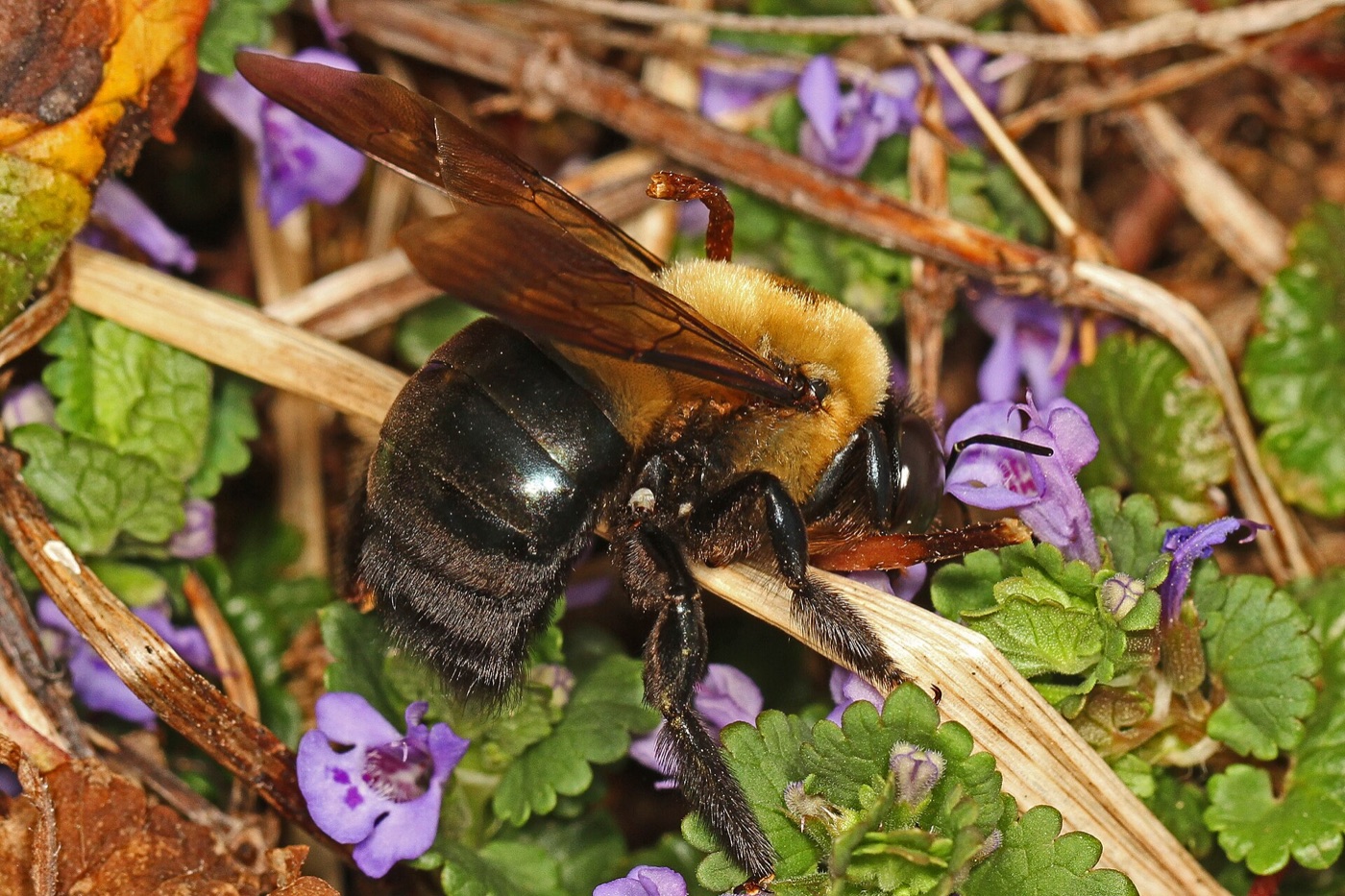
In New Jersey, the eastern carpenter bee is a familiar species. Its smooth, shiny abdomen helps distinguish it from a bumble bee, whose abdomen is covered in hair.
ADULT / BODY
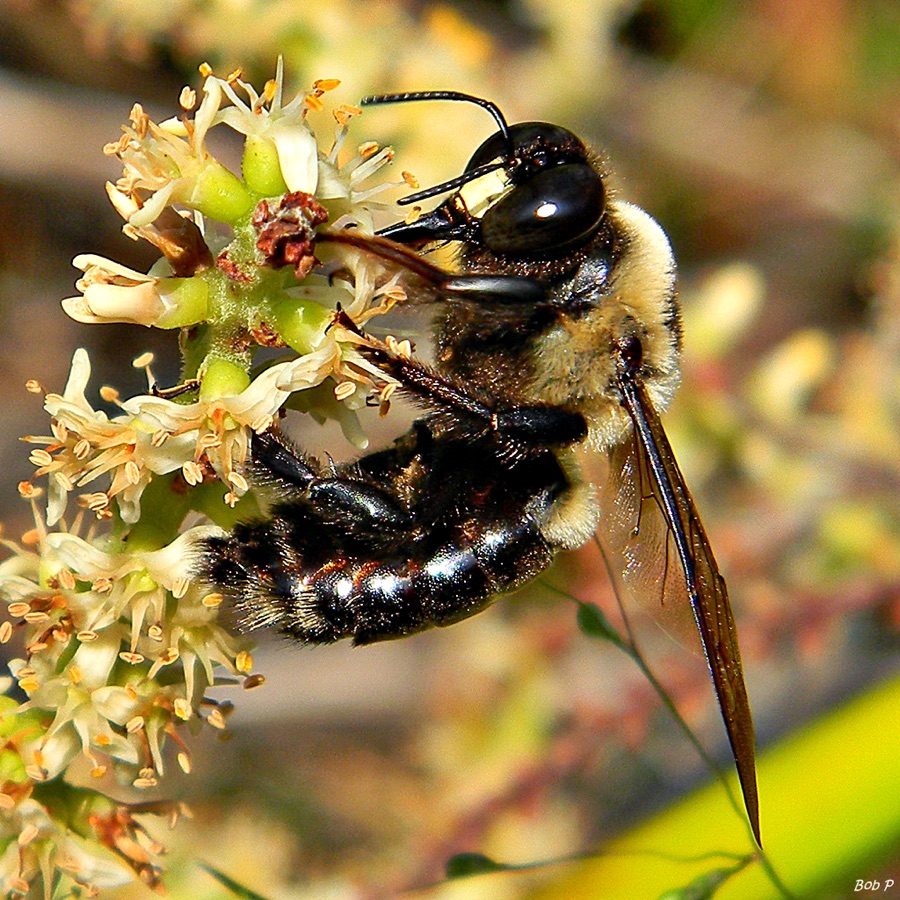
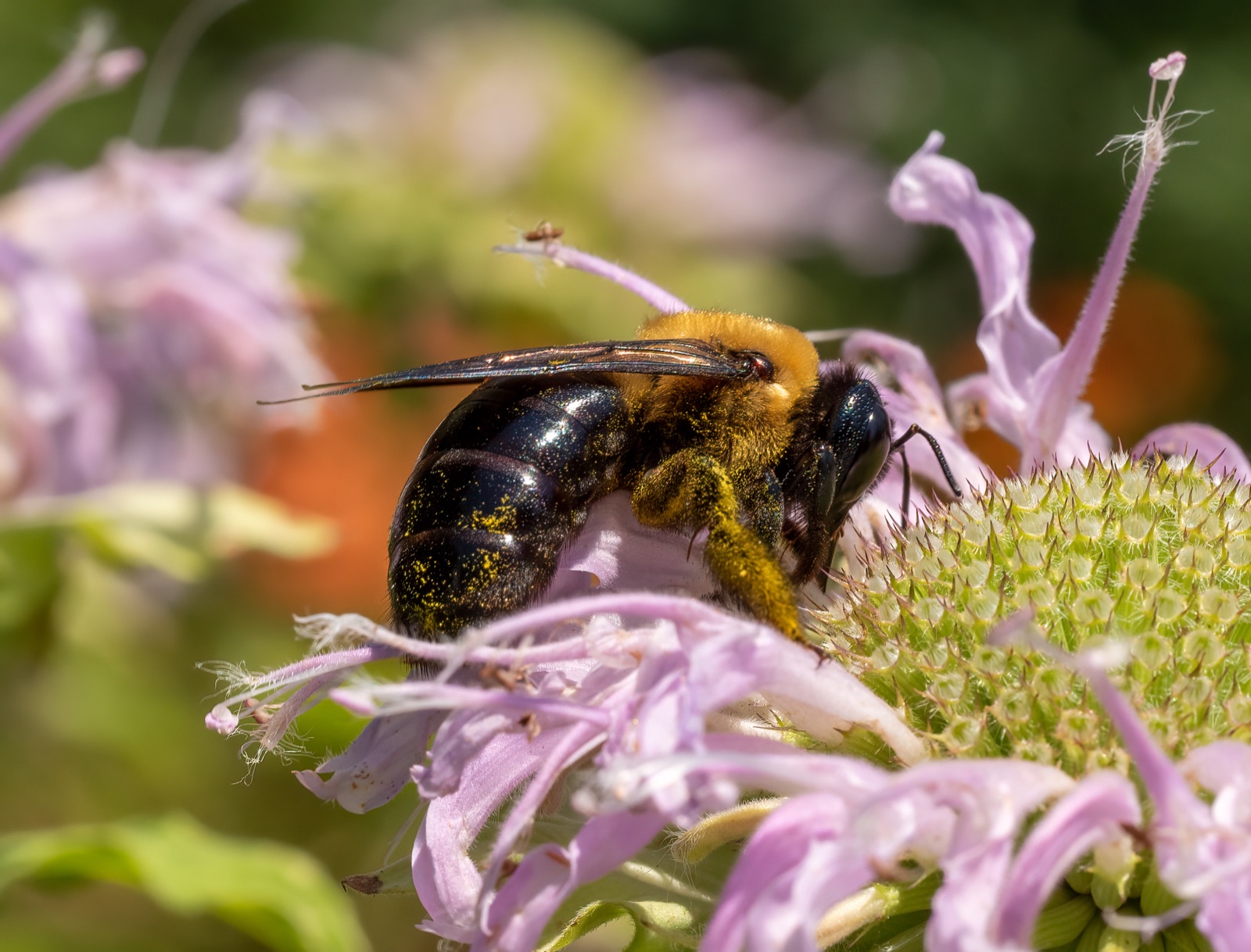
The eastern carpenter bee has a dark, mostly hairless abdomen and a fuzzy yellowish thorax. It is often mistaken for a bumble bee at a glance.
FEMALE / NESTING
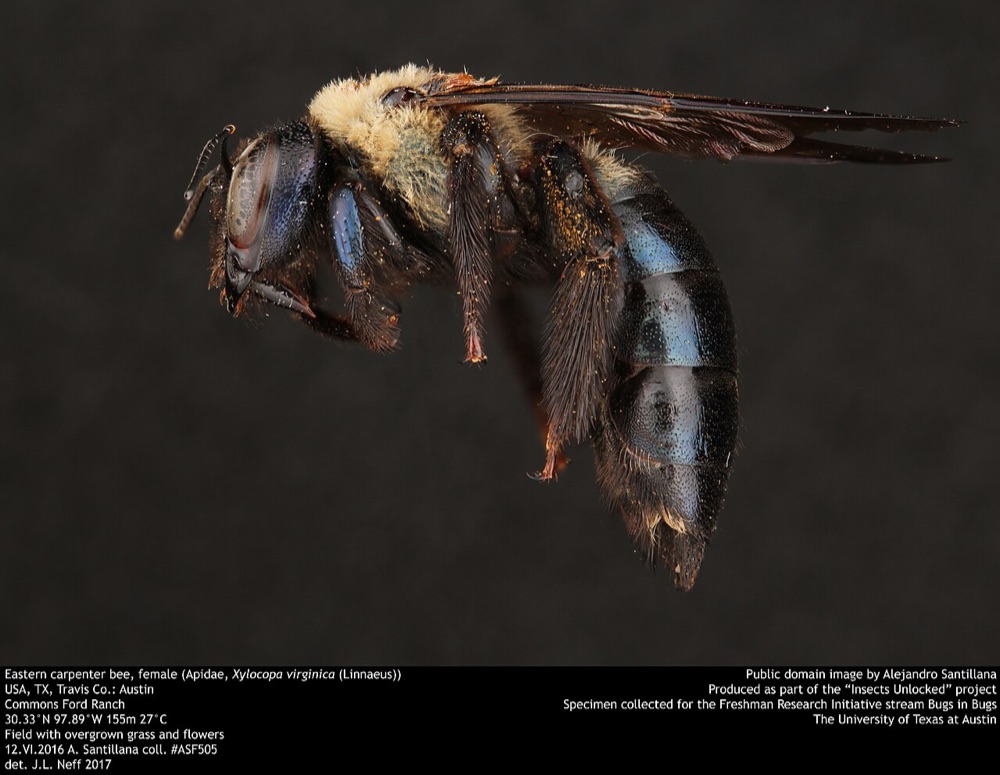
Females excavate nest tunnels in wood and provision their young with pollen. Their face is black, and they can sting if handled.
MALE / FACE
Males have a pale yellow or cream-colored face. They may hover near nesting sites, but male carpenter bees cannot sting.
The photos show separate real carpenter bees and a nesting hole; exact size and markings can vary. A close photo and the location of activity help with identification.
A COMMON QUESTION
Female carpenter bees can sting, but they are generally not aggressive and usually sting only if handled or trapped. Males may buzz close while defending a territory, but they have no stinger.
Give nesting bees space and avoid handling them. If bees are entering structural wood, a professional can identify the activity and recommend a measured response.
THE VORIAN APPROACH
We assess the nesting location, the condition of the wood and the right next step for your property.
REQUEST SERVICE